


After the Dystopia: We Grow Again
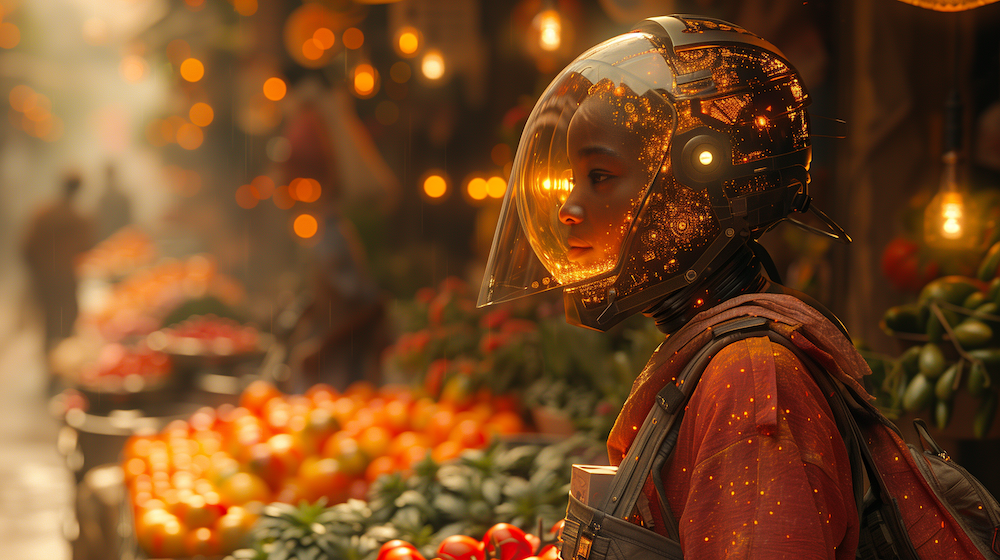
The most honest conversation happening in founder circles right now isn't about which AI model wins. It's about what we rebuild once we realize the machine optimized us out of the things that actually made us human.
By May 2026, over 70% of Americans believe AI is advancing too fast across generations and political parties. This isn't technophobia. It's grief. Grief for the texture of a world where human friction meant something, where inefficiency was actually intimacy in disguise.
The Ghost in the Machine
Theorists like James Van Geelen at Citrini Research have coined a term that should keep every founder up at night: "ghost GDP." It describes an economy where AI inflates national accounts without ever circulating through the real economy, because machines spend zero dollars on discretionary goods. The nightmare scenario is a negative feedback loop: AI displaces white-collar workers, consumer spending contracts, companies automate more to cut costs, and the cycle deepens. The moats many platforms built were built on friction, and friction is going to zero.
This is the dystopia. Optimized. Frictionless. And completely hollow.
But Here's What the Algorithms Can't Eat
The most interesting counter-conversation happening right now, in founder chats, regenerative food circles, and wellness communities, is this: what survives is what was always irreplaceable.
Faith leaders, community organizers, and even Silicon Valley dissidents are raising alarms not about technology itself, but about AI's assault on family life, human relationships, and the labor of love. Their prescription isn't Luddism. It's reclamation.
The things that cannot be optimized away:
- The table. Food grown, prepared, and shared together.
- The body. Medicine that actually knows you, your genetics, your gut, your grandmother's recipes.
- The room. Being present with other humans, unreplicated by any avatar or agent.
- The season. Time, the gift of having enough of it to be somewhere again.
Personalized Medicine Meets Personalized Food
We are entering the age where the gap between your genome and your grocery list finally closes. Personalized medicine now uses genetic profiles, lifestyle habits, environmental context, and medical history to guide treatment, moving definitively beyond the one-size-fits-all era. AI-powered wearables continuously monitor patient health in real time, with devices already dynamically adjusting insulin delivery for diabetics and alerting clinicians before conditions worsen.
Now map that to food. What if your meal plan was built from your microbiome, your heritage, your inflammation markers, your season of life? What if food companies stopped selling products and started delivering prescriptions for vitality? This is the white space Journey Foods was built for, and the market is waking up to it. The global traditional and integrative medicine market alone is expected to reach nearly $600 billion in 2025, with AI accelerating it further. The intersection of ancestral food wisdom, genomic data, and precision nutrition isn't a niche. It's the next frontier of human health infrastructure.
Time Is the New Luxury
Here's the philosophical flip that the post-dystopia era demands: in a world where AI does more, humans must resist the urge to simply produce more. The real dividend of automation should be time, and the founders and thinkers building toward a regenerative future are insisting we spend that time in person, in community, at the table.
There's a growing theorist class, part economist, part anthropologist, part builder, arguing that the next economic value creation will live in high-trust, high-presence human experiences that AI cannot replicate or route around. Nurse. Teacher. Artist. Chef. Community builder. These roles aren't the "bottom tier" of a post-AI economy. They are its beating heart. The jobs and experiences that require you to show up, to touch, to taste, to witness.
We Grow Again
The most radical act in the age of AI is to plant something.
To gather people around a table and cook food that knows where it came from. To build community infrastructure, not apps, but places, where people heal, eat, learn, and create together. To practice medicine that treats the whole person, not just the symptom. To slow down enough to actually be in the room with the people you love.
The founders I'm watching aren't just building companies. They are building conditions for human flourishing in the aftermath of the machine age. They understand that community is the moat that friction-elimination can never dissolve. You cannot automate belonging. You cannot A/B test a grandmother's kitchen. You cannot compress the meaning of a shared meal into a prompt.
The dystopia optimized for efficiency. The renaissance we're growing into optimizes for aliveness.
And this time, we build it together, with roots, with tables, with time, and with each other.