





Best Food Movies of 2025: The Films Worth Watching
The 8 Best Food Movies of 2025
Food movies are never only about food.
They are about who gets to eat, who gets to cook, who owns the ingredients, whose traditions survive, and who profits when culture becomes a product. As a food scientist and fourth-generation food entrepreneur, I watch these films with two brains: one that wants to enjoy the story and another that immediately starts tracing the labor, biology, technology, and economics behind every plate.
The best food films of 2025 traveled far beyond the familiar European fine-dining kitchen. This year’s strongest stories took us from a Palestinian grain mill and a Bangkok restaurant to rural Spain, Tokyo, Vietnam, and an Italian grandmother-led kitchen in Staten Island.
Here are my eight favorites.
1. Aisha’s Story
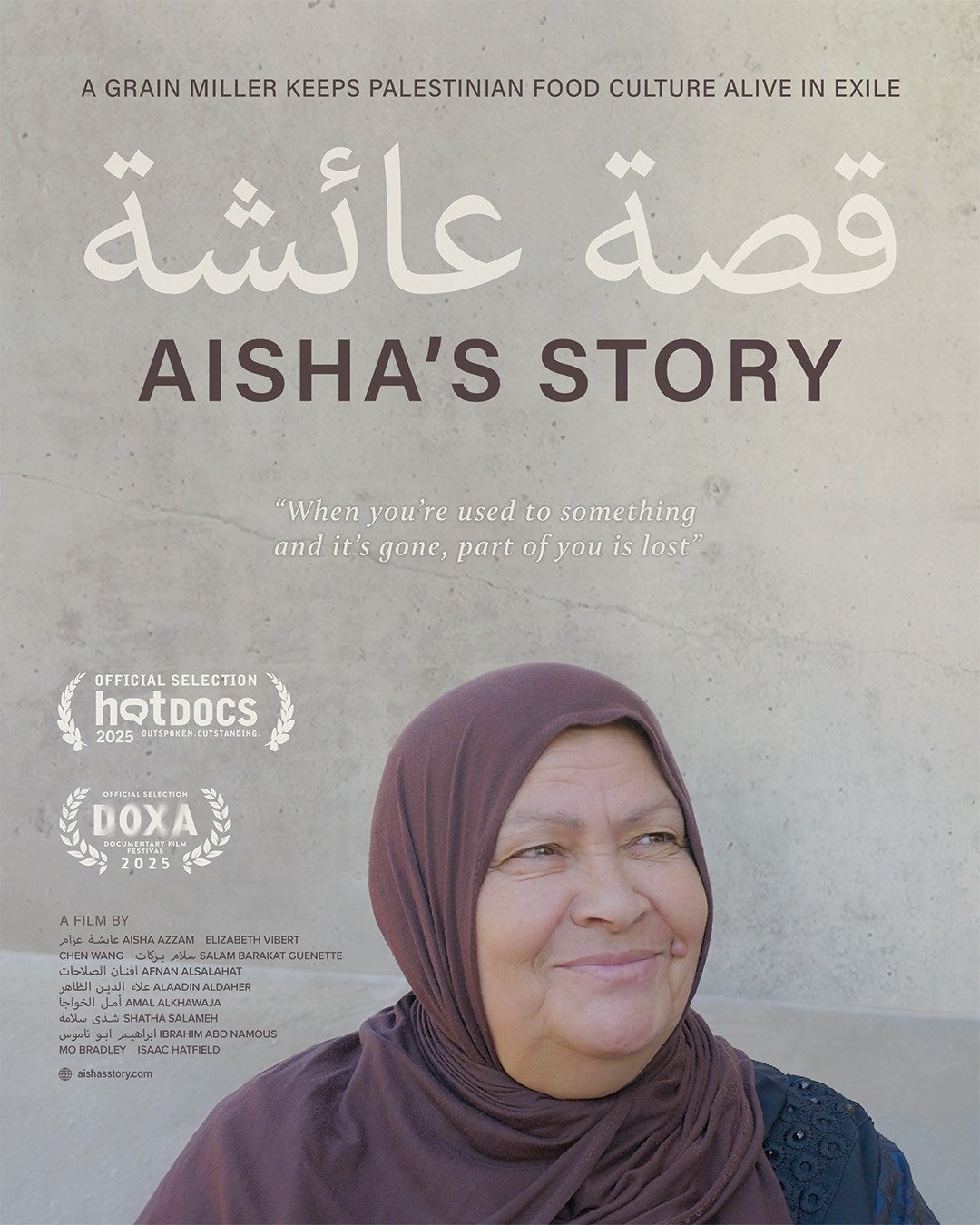
This intimate documentary follows Aisha Azzam, a Palestinian woman who has operated a grain mill with her husband in Jordan’s Baqa’a refugee camp for decades. Through wheat, herbs, harvesting, milling, and communal meals, Aisha preserves Palestinian culture while telling a larger story about displacement, survival, and belonging. (aishasstory.com)
What stayed with me is how clearly the film understands that food preservation is not nostalgia. It is infrastructure.
A grain mill may look simple beside a modern factory, but it holds knowledge, nutrition, memory, and economic agency. When communities lose access to land, equipment, ingredients, or local production, they do not merely lose recipes. They lose part of their ability to feed and define themselves.
This is one of the most important food films of the year because it centers a woman whose labor would typically remain invisible.
2. Morte Cucina
In this Thai culinary thriller, Sao is a gifted cook working as a waitress in Bangkok. When she encounters the man responsible for her physical and emotional trauma, she uses her command of Thai cuisine to draw him into a plan for revenge. (sansebastianfestival.com)
This is not the comforting version of food storytelling. Here, cooking becomes power, memory, strategy, and danger.
I appreciated seeing a woman’s culinary intelligence treated as more than domestic care or visual decoration. Sao knows ingredients, timing, appetite, and human behavior. That expertise gives her agency.
The film also reminds us that kitchens are not inherently nurturing spaces. They can reproduce hierarchy, violence, and control just as easily as they produce pleasure.
3. Mam
Mam follows a Texas chef who dreams of opening a Vietnamese restaurant in New York. It brings migration, ambition, and Vietnamese cuisine into a story about what happens when personal identity collides with the economics of building a restaurant. (sansebastianfestival.com)
I am always interested in films that understand a restaurant as both a cultural project and a financial gamble.
People love to celebrate the bravery of opening a restaurant. We talk less about rent, sourcing, payroll, permitting, margins, and the pressure to make culturally specific food legible to customers who may expect a simplified version of it.
That tension is especially sharp for immigrant and diasporic chefs. How much can a dish change before adaptation becomes erasure? Who gets to define “authentic”? And why are some chefs allowed to experiment while others are expected to perform tradition perfectly?
4. Nonnas
Based on the story behind Staten Island’s Enoteca Maria, Nonnas follows a man who risks his savings to open an Italian restaurant staffed by grandmothers rather than conventionally trained chefs. (en.wikipedia.org)
It is warm, accessible, and easy to enjoy—but underneath that sweetness is an important idea: some of our most valuable culinary experts have never been recognized as experts.
Grandmothers have spent generations testing recipes, adapting to ingredient shortages, feeding large families, and transferring knowledge without formal laboratories or Michelin stars. That is research and development, even if we have rarely called it that.
I would have loved the film to push further into the economics of unpaid domestic labor. Still, it succeeds in giving older women authority, personality, and room to be more than sentimental symbols.
5. Nobu
This documentary traces Nobu Matsuhisa’s journey from Japan through Peru and Alaska to the creation of an international restaurant and hospitality empire. It explores the cultural encounters, failures, and partnerships that helped transform Nobu into a global luxury brand. (2025 Tribeca Festival)
For entrepreneurs, this may be the most instructive film on the list.
Nobu’s story demonstrates that culinary innovation rarely happens in isolation. It emerges through migration, ingredient constraints, cultural exchange, hospitality, capital, and consistent execution.
The bigger question is what happens when a chef’s personal interpretation becomes a global system. Can intimacy survive scale? Can ingredient quality, worker experience, and cultural specificity remain consistent across dozens of locations?
Building the first restaurant is one challenge. Building the data, sourcing, training, and quality systems behind the fiftieth is another.
6. Tokito: The 540-Day Journey of a Culinary Maverick
Tokito follows Michelin-starred chef Yoshinori Ishii as he and his team transform a historic Japanese restaurant into an innovative Tokyo auberge. The documentary connects his search for distinctive ingredients with sustainability, cultural heritage, nature, and the personal cost of creative ambition. (Apple TV)
This film gets closer than most chef documentaries to showing that provenance is difficult work.
A beautiful ingredient does not simply arrive in a kitchen. Someone grows it, catches it, transports it, inspects it, stores it, and absorbs the risk when nature disrupts the plan. Sustainability is not an adjective a restaurant adds to its menu. It is a long chain of decisions involving cost, biodiversity, reliability, and relationships.
The film is visually elegant, but its deeper value comes from showing creativity as a system rather than a single moment of inspiration.
7. Ebullición
Instead of focusing on celebrity chefs, Ebullición visits seven pioneering restaurant projects across Spain—from depopulated rural areas to major cities and heavily traveled coasts—to examine whether restaurants can become engines of sustainability and social change. (Catálogo de Películas ICAA)
This is the food-systems film on my list.
Restaurants increasingly feed people who have less time, space, or energy to cook at home. That gives restaurants enormous influence over ingredient demand, nutrition, waste, labor, and regional agriculture.
I appreciate that Ebullición moves the conversation away from individual perfection. A chef can care deeply about sustainability, but care needs operational support: purchasing data, supplier visibility, waste measurement, workforce stability, and prices customers can actually afford.
Good intentions do not scale themselves.
8. Raoul’s, A New York Story
This documentary tells the story of Raoul’s, the French bistro opened by two Alsatian brothers in Soho in 1975. What began as a modest attempt to bring affordable French cooking to New York became an institution closely connected to the neighborhood’s artistic history and several influential culinary careers. (raoulsdocumentary.com)
I love restaurant stories that allow a place to become a character.
Restaurants hold cities together in ways that are difficult to quantify. They create jobs, rituals, romances, creative communities, and informal networks. But their survival also depends on real estate, succession planning, neighborhood change, and the ability to evolve without losing the thing people originally loved.
Raoul’s is ultimately about inheritance—not simply inheriting a business, but deciding which parts of its identity must be protected and which parts must change.
What the Best Food Movies Still Miss
Even across this strong and geographically diverse year, food storytelling continues to have several blind spots.
Labor remains too invisible. We see the visionary chef more often than the people planting, picking, processing, washing, packing, and delivering the ingredients.
Nutrition science remains simplified or avoided. A film may spend twenty minutes exploring the emotional meaning of a dish and almost no time examining what processing, fermentation, drying, smoking, or reformulation does to that food.
Technology is still presented as either a threat or a miracle. The truth is less cinematic and more useful: technology is a collection of tools shaped by the people, incentives, and institutions controlling it.
Supply chains tend to disappear at the kitchen door. We see a chef touch a perfect tomato, fish, or grain, but rarely see the data, negotiations, climate risks, logistics, and labor that brought it there.
That is the next frontier for food cinema.
I want more stories that connect the pleasure of eating with the intelligence required to feed eight billion people. I want films that treat a grandmother’s technique, a farmer’s seed knowledge, a microbiologist’s fermentation research, and an engineer’s traceability system as parts of the same human story.
Because food is culture, but it is also biology, infrastructure, labor, technology, and power.
The best food films help us taste all of it.