


Food Access Inequality: Why the Business Community Can No Longer Treat This as a Charity Problem
- The Charity Frame Has Always Been the Wrong Frame
- What the Data Actually Tells Us
- Why Business Leaders Need to Hear This Differently
- The Difference Between Charity and Structural Investment
- Food Tech Has a Specific Responsibility Here
- What I Want Business Leaders to Actually Do
- This Is Personal for Me
- The Bottom Line
- Frequently Asked Questions
The Charity Frame Has Always Been the Wrong Frame
When we talk about food access inequality as a charity problem, we're essentially saying: this crisis exists outside the normal functioning of business. We'll address it when we have extra resources. We'll throw money at it when the optics demand it.
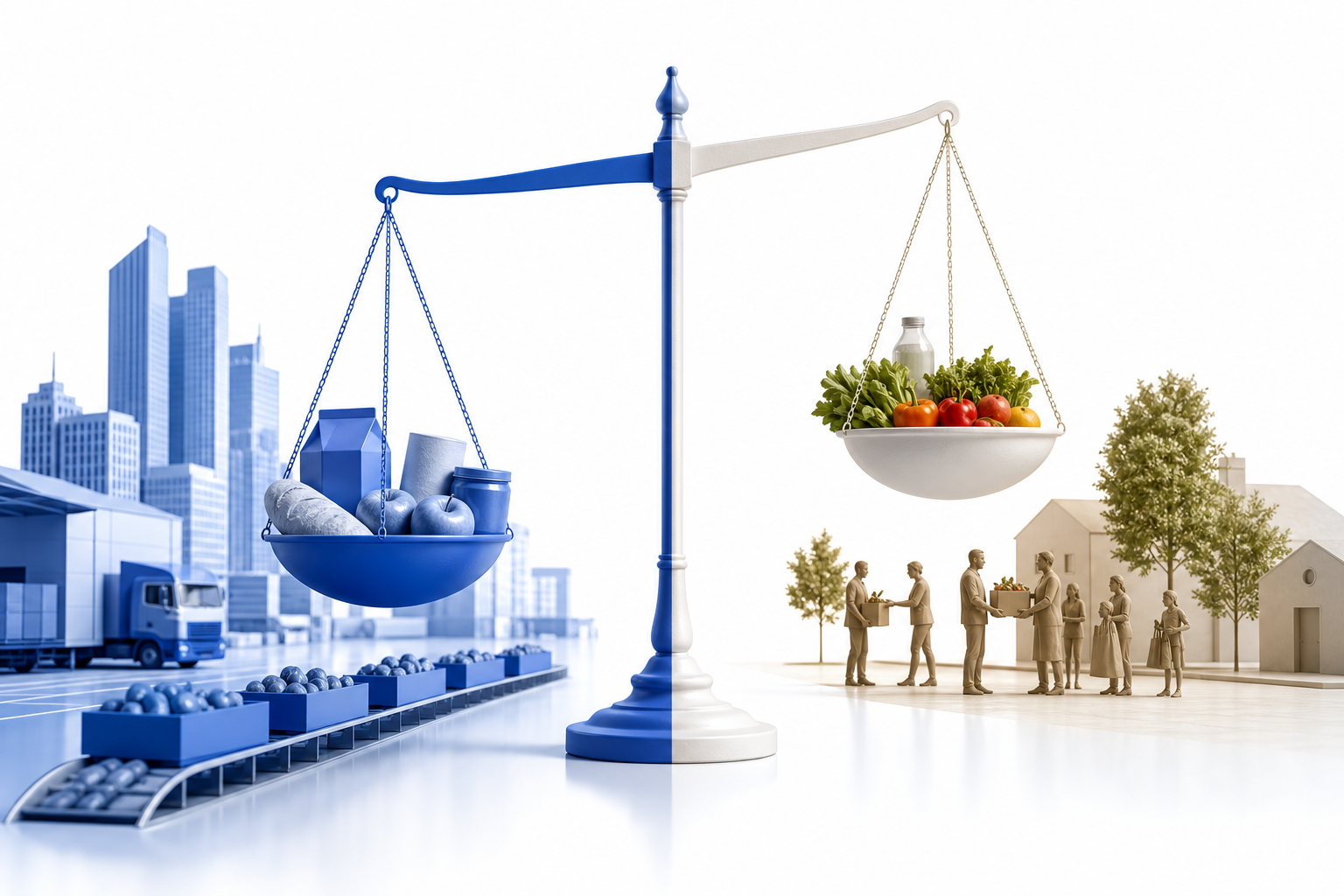
But food insecurity isn't some gap that exists outside the economy. It's a direct product of how our economy is structured. The communities that lack consistent access to nutritious, affordable food are the same communities that have been systematically excluded from wealth-building, from land ownership, from the supply chains that feed everyone else. That's not a coincidence. That's architecture.
The charity frame lets business off the hook. It positions corporations and investors as generous saviors rather than as participants in a system that created the problem in the first place.
What the Data Actually Tells Us
I want to be careful not to throw out numbers that don't hold up. But here's what we know directionally — and what I've seen firsthand across food tech and food policy.
Food deserts aren't randomly distributed. They cluster in low-income neighborhoods, in communities of color, in rural areas that were stripped of economic infrastructure decades ago. The families living there are not making poor choices. They're navigating a system that was never designed to serve them.
Meanwhile, the food industry generates enormous revenue. The global food and beverage market is one of the largest on the planet. Grocery chains post record profits. Food delivery platforms scale to billion-dollar valuations. And the communities with the least access to nutritious food remain exactly where they were.
That gap isn't a market failure in the traditional sense. It's a market choice. And that distinction matters enormously when we're deciding who is responsible for fixing it.
Why Business Leaders Need to Hear This Differently
I speak to a lot of business audiences — founders, executives, investors, operators. When food access comes up, I notice a pattern: people lean back slightly. They get polite. They nod. And then they mentally file it under "philanthropy" and move on.
I want to interrupt that reflex.
Food system equity is a business issue in the most practical sense. Here's why.
Workforce stability depends on it. When your employees — especially hourly and frontline workers — don't have reliable access to nutritious food, it shows up in productivity, in absenteeism, in health outcomes that cost companies real money. This isn't abstract. It's operational.
Consumer markets are shifting. The communities historically underserved by the food system are also some of the fastest-growing consumer segments in the country. Brands that figure out how to genuinely serve those communities — not exploit them, serve them — are building long-term loyalty and market share. Brands that don't are leaving money on the table while also doing harm.
Supply chain resilience requires it. If your supply chain runs through communities that lack economic stability, you have fragility built into your model. Investing in food system equity in those communities is, among other things, an investment in your own supply chain.
Regulatory pressure is building. ESG requirements, food justice legislation, and investor scrutiny around social impact are all intensifying. Companies that wait for regulation to force their hand will spend years playing catch-up. Companies that move now will help shape what the standards actually look like.
The Difference Between Charity and Structural Investment
I'm not saying don't donate food. Donation programs serve a real immediate need and I'm not dismissing that.
What I'm saying is: donation is not a strategy.
Structural investment looks different. It looks like sourcing from Black and Brown-owned farms and food businesses — not as a PR move, but as a genuine procurement shift that builds economic power in underserved communities. It looks like investing in food infrastructure where it's missing: grocery stores, cold storage, distribution networks. It looks like paying supply chain workers wages that actually let them feed their families.
It looks like asking, at the board level: what is our role in the food system, and who benefits from how we operate?
These aren't easy questions. They require companies to look honestly at their own practices, their sourcing decisions, their real estate footprint. But they're the right questions.
Food Tech Has a Specific Responsibility Here
I've worked in food tech for years, and I genuinely love this space. The innovation happening around food production, distribution, and access is exciting. But I also see a pattern that worries me.
A lot of food tech investment flows toward products and services for people who already have access. Premium meal kits. High-end vertical farms. Personalized nutrition apps for people with disposable income and smartphones. None of that is inherently bad. But when the majority of capital and talent in food tech is oriented toward the already-served, we're not solving the actual problem. We're decorating around it.
The entrepreneurs and investors who will matter most in the next decade of food tech are the ones who look at underserved communities not as charity cases but as markets. As customers with real preferences, real purchasing power, and real needs that current systems are failing to meet. That reframe — from charity to market, from problem to opportunity — is where the real innovation lives.
I've seen what happens when founders from those communities build for those communities. The solutions are sharper. The trust is already there. The business model is more durable. The impact is real.
What I Want Business Leaders to Actually Do
I'm not here to lecture. I'm here to push. So let me be specific.
Audit your supply chain for equity. Who are you buying from? Who is getting wealthy from your purchasing decisions? If the answer is "mostly people who already had wealth," that's a data point worth acting on.
Hire people with lived experience of food insecurity. Not as tokens. As decision-makers. The people who have navigated broken food systems have insights no consultant can replicate.
Stop treating food access as a marketing opportunity. I see companies run "hunger awareness" campaigns that generate more brand impressions than actual change. If your food access initiative is primarily a content strategy, it's not a food access initiative.
Put real money behind food infrastructure, not just food donation. Grants to community organizations matter. But so does investing in the physical and economic infrastructure that makes communities food-secure over the long run.
Show up to the policy conversation. Food system equity requires policy change, and businesses have enormous influence over policy. Use it. Advocate for SNAP expansion, for food sovereignty legislation, for zoning changes that allow food retail in underserved areas. Your lobbyists are already in the room. Point them somewhere useful.
This Is Personal for Me
I grew up understanding that food is not just nutrition. It's culture. It's community. It's dignity. When communities lack access to the foods that connect them to their heritage, to their families, to themselves, the harm isn't just physical. It runs deep.
That's a big part of why I've built my career at this intersection — food, technology, culture, and equity. Because the solutions we need aren't purely technical. They're not purely economic. They require people who can hold all of it at once.
If you're a business leader genuinely trying to figure out how to show up differently on this issue, I'd love to talk. It's exactly the kind of conversation I bring to keynotes, workshops, and strategy sessions. You can learn more about that work at rianalynn.com.
The Bottom Line
Food access inequality is a structural problem. It was built by specific decisions, by specific actors, over a long period of time. Charity won't solve it. What will solve it is the business community deciding to treat it as what it actually is: a systems problem that requires systems-level change — one that business has both the responsibility and the capacity to drive.
That shift starts with how we talk about it. It starts with retiring the charity frame and replacing it with something more honest: this is our problem too, and we have work to do.
Frequently Asked Questions
What is food system equity and why does it matter to businesses?
Food system equity means that all people — regardless of income, race, or geography — have consistent access to affordable, nutritious food. It matters to businesses because workforce health, consumer markets, supply chain stability, and regulatory compliance are all directly affected by how equitably the food system operates.
Why isn't charity enough to solve food access inequality?
Charity addresses immediate symptoms but doesn't change the structural conditions that create food insecurity. Long-term solutions require investment in food infrastructure, equitable sourcing practices, fair wages, and policy advocacy — none of which donation programs alone can deliver.
How can food tech companies contribute to food system equity?
Food tech companies can orient more of their capital and talent toward underserved markets, partner with founders from affected communities, invest in distribution infrastructure in food deserts, and design products accessible to lower-income consumers — not just premium segments.
What does structural investment in food access look like compared to donation?
Structural investment includes sourcing from minority-owned farms and food businesses, funding food retail and cold storage infrastructure in underserved areas, paying living wages throughout the supply chain, and advocating for food justice policy. Donation is a short-term response. Structural investment changes the underlying conditions.
How does food insecurity affect business operations directly?
Food insecurity among workers contributes to higher absenteeism, lower productivity, and increased healthcare costs. For companies with large hourly or frontline workforces, this is a measurable operational issue — not just a social one.
What role should business leaders play in food policy advocacy?
Business leaders have significant influence over policy through lobbying, public advocacy, and industry coalitions. Directing that influence toward SNAP expansion, food sovereignty legislation, and zoning reform that enables food retail in underserved areas is a concrete way to support food system equity beyond internal company practices.
Where can I learn more about Riana Lynn's work on food, equity, and technology?
I work at the intersection of food, AI, culture, and equity as a speaker, entrepreneur, and thought leader. You can explore my writing, speaking topics, and projects at rianalynn.com.