


Fork in the Road Review: A Food System Map
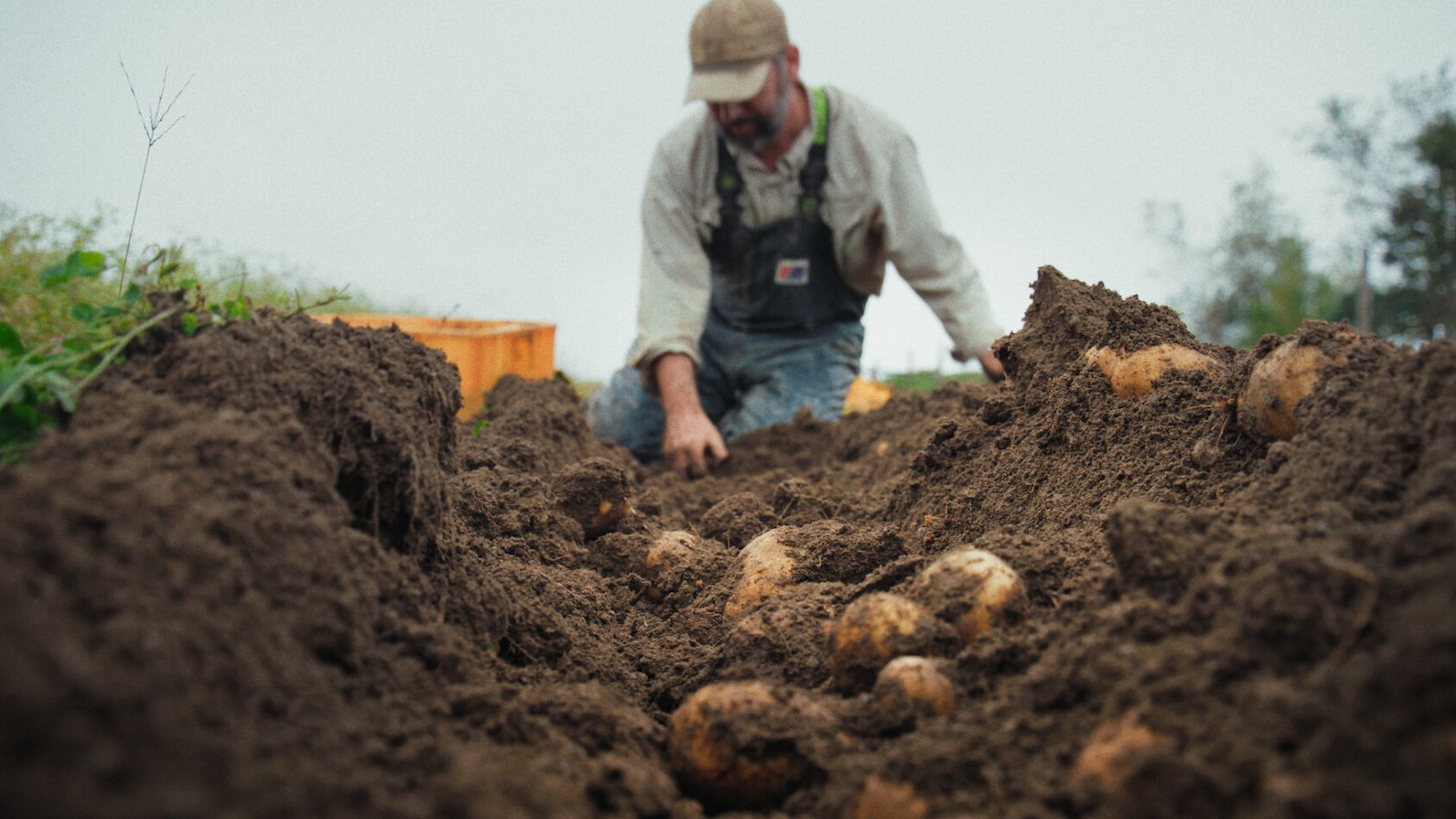
Most food documentaries are built around a villain. Fork in the Road is built around a map.
That is its great strength, and it is the reason I want more people to see it. As someone who spends her days building tools for food companies, I am tired of films that leave audiences angry and powerless. This one leaves you with names, places and a sense of what is already working.
The details: Fork in the Road (2026). Directed by Vivian Sorenson and Jonathan Nastasi, with Nastasi also serving as cinematographer. Executive produced by Nick Offerman, Lisa Holmes and Ricki Stern, among others. Featuring Nick Offerman, Dune Lankard, Ayana Elizabeth Johnson, Bren Smith, Mary Berry, Marc Murphy and Melissa Clark, with Wendell Berry heard off camera. World premiere at the Sonoma International Film Festival on March 28, 2026. Currently on the festival circuit, including a Heartland Film Festival virtual screening opening October 8, 2026.
The antagonist is a system
The directors have said plainly that the antagonist of the film is the industrial food system. But they don't spend the film prosecuting it. They spend it with people working around it.
The film moves across the country. In Prince William Sound, Alaska, Dune Lankard, an Eyak Athabaskan Native, works on kelp farming in waters still marked by the Exxon Valdez oil spill. On the Connecticut coast, Bren Smith, a former fisherman whose oyster farm was wiped out by back to back hurricanes, farms kelp and shellfish together. In Kentucky, a farm family transforms how they farm. In the Bronx, an urban community farm takes on what many advocates now call food apartheid. In the Salinas Valley, a farmworker whose health was harmed by pesticides starts an organic fruit farm with her daughters.
Those are not the same story. That is the point. The film argues that there will not be one solution. There will be many, rooted in place.
Nonprofits as infrastructure
The idea I found most valuable is one the directors emphasized at the premiere: without nonprofits, many of these farmers could not farm the way they want to. The Berry Center, launched in 2011 by Wendell Berry's daughter Mary Berry Smith, is one of the organizations the film features, and Nick Offerman travels to Henry County, Kentucky, to learn how it supports small farmers.
That is a huge insight, and it rarely gets said out loud. We talk about regenerative agriculture like it is a set of farming techniques. It is also a set of support systems: training, financing, land access, processing, distribution and buyers. Remove that infrastructure and the most beautiful farm in the world struggles to survive. This is exactly why I care so much about making food data and supply chains legible. Good intentions do not scale themselves. Infrastructure does.
Kelp needs a market, not just a mission
Some of the film's most charming moments come when chef Marc Murphy and New York Times food columnist Melissa Clark work out how to make kelp delicious. I loved this, because it is the most honest acknowledgment in the film that sustainability has to taste good.
As a food scientist, I would have happily watched an entire second film about this part: the texture, the flavor, the processing, the shelf life, the price point, the product formats. Kelp can be an extraordinary ingredient. But demand is designed. Someone has to build the recipes, the products and the habits.
The voice that grounds it
Wendell Berry, now in his nineties, is interviewed off camera, and his voice gives the film its moral center. "The future of food is not distinguishable from the future of the land, which is indistinguishable, in turn, from the future of human care," he says.
It is the thesis of my own work in fewer words than I usually manage.
What I want next
A film built on hope has to choose where to spend its time, and this one chooses people. The questions I would love a follow up to dig into are the hard economics: what these farms earn, what their food costs, how many people they can feed, and what policy would help them grow. That is not a criticism. It is the next film someone needs to make.
Verdict
Seek it out. Fork in the Road is a generous, beautifully shot, quietly urgent documentary that treats farmers, fishers and cooks as innovators, which is exactly what they are. If you can catch the Heartland virtual screening or a festival near you, go. Then ask your local grocery store whether they carry anything grown by the kinds of people in this film.
Cover image: Courtesy of Sonoma International Film Festival via SonomaFilmFest.org