


My 10 Favorite Food Movies (A Personal List From a Food Scientist)
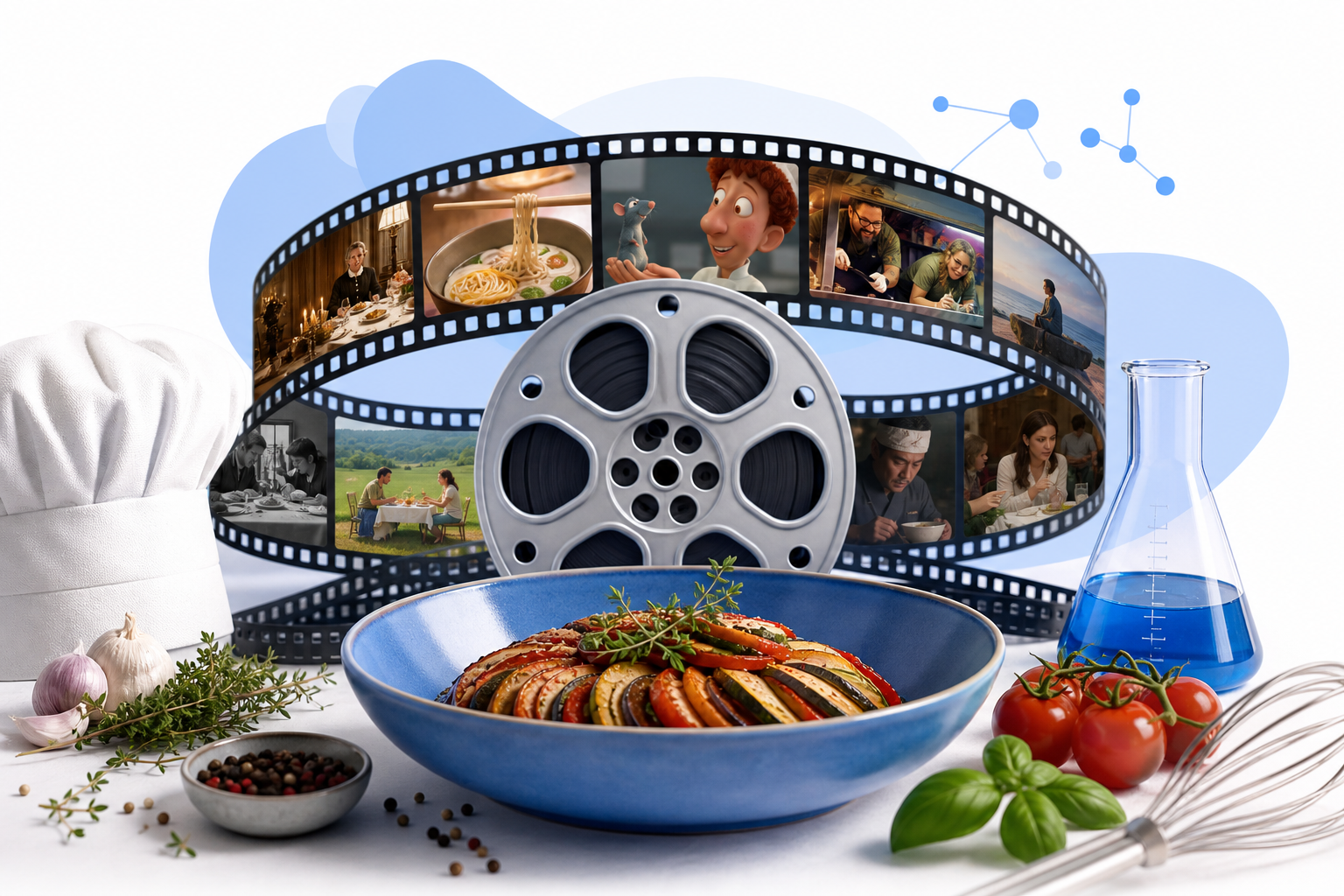
- 1. Babette's Feast (1987)
- 2. Tampopo (1985)
- 3. Julie & Julia (2009)
- 4. Ratatouille (2007)
- 5. Chef (2014)
- 6. The Hundred-Foot Journey (2014)
- 7. Mostly Martha (2001)
- 8. Jiro Dreams of Sushi (2011)
- 9. Big Night (1996)
- 10. Eat Drink Man Woman (1994)
- A Few Final Thoughts
- FAQs
1. Babette's Feast (1987)
The movie: A French refugee named Babette arrives in a remote Danish village and spends her entire lottery winnings preparing one extraordinary meal for the austere religious community that sheltered her.
Main characters: Babette Hersant, and the two elderly sisters who took her in.
Why I love it: This film is the reason I believe food is an act of grace. Babette doesn't explain herself. She just cooks. The meal becomes an argument for beauty and generosity — for the idea that excellence matters even when no one around you can fully appreciate it. As a scientist and builder, I think about that constantly.
How to watch: Available to rent on Amazon Prime Video and Apple TV.
2. Tampopo (1985)
The movie: A Japanese "ramen western" following a truck driver who helps a widowed noodle shop owner perfect her recipe and build a loyal customer base.
Main characters: Tampopo, Goro, and a rotating cast of food obsessives.
Why I love it: Tampopo is genuinely funny and genuinely rigorous at the same time — a rare combination. It treats the pursuit of a perfect bowl of ramen with the same seriousness a scientist brings to a research problem. The side vignettes about food, desire, and ritual are some of the most original filmmaking I've encountered.
How to watch: Streaming on The Criterion Channel; available to rent on most major platforms.
3. Julie & Julia (2009)
The movie: Two parallel stories — Julia Child finding her culinary voice in postwar Paris, and Julie Powell cooking every recipe in Child's cookbook in a single year while blogging about it.
Main characters: Julia Child (Meryl Streep), Paul Child, and Julie Powell (Amy Adams).
Why I love it: Julia Child was a late bloomer who found her thing and went all in. I find that genuinely inspiring. Streep's performance is so full of joy that it's hard to watch this movie and not feel like whatever you're building is worth the effort.
How to watch: Streaming on Max; available to rent on Amazon and Apple TV.
4. Ratatouille (2007)
The movie: A rat named Remy dreams of becoming a chef in Paris and secretly guides a young kitchen worker through the culinary world.
Main characters: Remy, Linguini, and the formidable critic Anton Ego.
Why I love it: The food science in this film is more thoughtful than in most live-action movies. The flavor pairing sequences, the way Remy experiences taste as synesthesia, the balance between intuition and precision — it's a children's film that takes cooking seriously as a discipline. That's not easy to pull off.
How to watch: Streaming on Disney+.
5. Chef (2014)
The movie: A celebrated restaurant chef loses his job after a public meltdown and rebuilds his career — and his relationship with his son — by running a food truck.
Main characters: Carl Casper (Jon Favreau), his ex-wife, and his son Percy.
Why I love it: This one is about what happens when you stop making things for other people's expectations and start making them for yourself again. I've navigated that tension between building for the market and building from conviction more than once. That theme lands every time I watch it.
How to watch: Streaming on Netflix.
6. The Hundred-Foot Journey (2014)
The movie: An Indian family opens a restaurant in a French village directly across from a Michelin-starred establishment, and a young chef navigates the collision of two culinary worlds.
Main characters: Hassan Kadam, Madame Mallory (Helen Mirren), and Hassan's father.
Why I love it: At its core, this film is about what happens when two food traditions are forced to truly see each other. The tension between honoring where you come from and learning what's right in front of you is something I think about constantly in food systems work.
How to watch: Streaming on Disney+; available to rent on Amazon and Apple TV.
7. Mostly Martha (2001)
The movie: A German chef who lives entirely through her work is forced to care for her orphaned niece, and a warm Italian sous chef disrupts her carefully controlled world.
Main characters: Martha, her niece Lina, and Mario.
Why I love it: Martha is one of the most accurate portrayals of a certain kind of obsessive food professional I've ever seen on screen. Her relationship to the kitchen is almost clinical, and the film doesn't mock that — it just shows what happens when life insists on softening you anyway.
How to watch: Available to rent on Amazon Prime Video and Apple TV.
8. Jiro Dreams of Sushi (2011)
The movie: A documentary following 85-year-old Jiro Ono, widely considered the world's greatest sushi chef, and his small restaurant tucked inside a Tokyo subway station.
Main characters: Jiro Ono and his sons.
Why I love it: I know it's a documentary, but it functions like a film — a meditation on mastery, on the relationship between craft and identity, and on what it means to dedicate your life to one thing. I've watched it more times than I can count, and it still holds.
How to watch: Streaming on Netflix.
9. Big Night (1996)
The movie: Two Italian brothers running a struggling restaurant in 1950s New Jersey stake everything on one extraordinary dinner meant to save their business.
Main characters: Primo (Tony Shalhoub) and Secondo (Stanley Tucci).
Why I love it: Big Night is about the cost of uncompromising standards. Primo refuses to make bad food even when it means the restaurant fails. There's something both heartbreaking and admirable about that. The final scene — a simple scrambled egg breakfast made in silence — is one of the most moving endings in cinema.
How to watch: Available to rent on Amazon Prime Video and Apple TV.
10. Eat Drink Man Woman (1994)
The movie: A widowed master chef in Taipei prepares elaborate Sunday dinners for his three adult daughters as they each navigate love, ambition, and independence.
Main characters: Chu, and his daughters Jia-Jen, Jia-Chien, and Jia-Ning.
Why I love it: Ang Lee uses food as the only real language between a father and his children. The cooking sequences are stunning and technically precise. But more than that, the film understands that feeding people is a form of communication when words fail — and that idea sits at the center of almost everything I think about in food culture.
How to watch: Streaming on The Criterion Channel; available to rent on most major platforms.
A Few Final Thoughts
The thread connecting these ten films is that the best ones treat food as a way of understanding people, not just as a backdrop for drama. The kitchen is where identity, culture, and ambition all show up at once. That's what I find endlessly interesting about it — on screen and in real life.
I write about food, science, and culture regularly at rianalynn.com. If any of these films sparked something for you, or if you have a favorite I missed, I'd genuinely love to hear about it. My newsletter is a good place for that kind of conversation.
FAQs
Are these films ranked from best to worst?
No. The order is loosely chronological and doesn't reflect a ranking. Every film on this list earned its place for different reasons.
Why include a documentary like Jiro Dreams of Sushi alongside narrative films?
It functions more like a character study than a traditional documentary, and the way it explores mastery and craft felt too relevant to leave out. It belongs in any honest conversation about food on film.
What makes a food movie good from a food scientist's perspective?
Specificity. The best food films treat cooking as a discipline with real stakes, real technique, and real meaning. They don't use food as a lazy metaphor. They show that what you make — and how you make it — says something true about who you are.
Are all of these films family-friendly?
Most are appropriate for older kids and adults. Tampopo has some adult content in its vignettes, and Big Night deals with themes of failure and loss that younger children may find slow. Ratatouille is the most universally family-friendly on the list.
Where can I find more of your writing on food and culture?
At rianalynn.com, where I publish essays, project updates, and newsletter content on food, AI, and the intersection of science and culture.
Do you think Hollywood gets food science right?
Rarely in a technical sense — but the best films get the emotional truth of food right, which matters more for storytelling. Ratatouille comes closest to capturing something real about flavor perception and culinary intuition.
Is there a film you almost included but left off?
Several. Spinning Plates, Like Water for Chocolate, and The Lunchbox were all close. The list could easily be thirty films long.