


Sinners Review: Ownership, Music and Joy
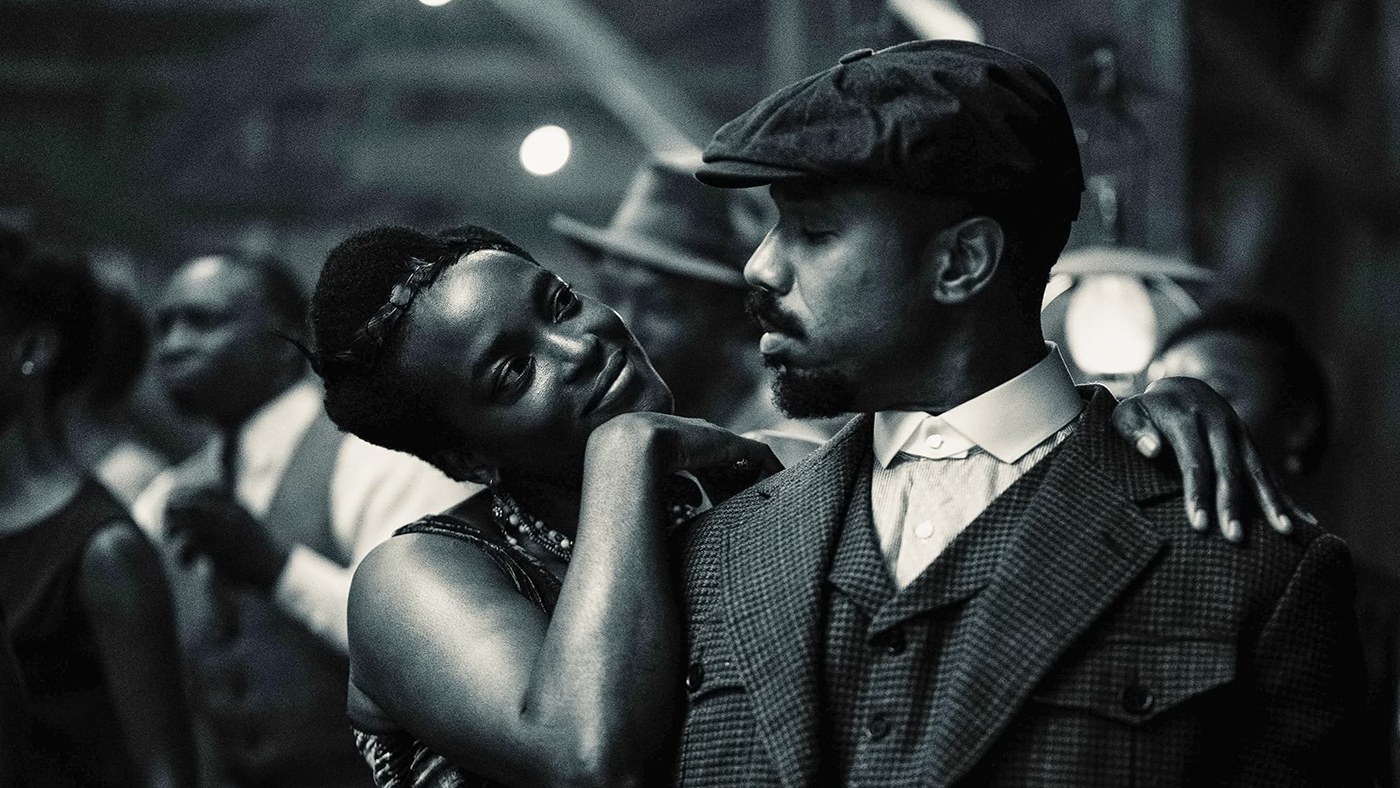
Sinners is a vampire movie. It is also the best film I have seen about what it costs a Black community to own something.
Ryan Coogler wraps that idea in blood, blues and a full moon, and somehow it never gets lost.
The details: Sinners (2025). Written, directed and produced by Ryan Coogler. Starring Michael B. Jordan in dual roles, with Hailee Steinfeld, Miles Caton in his film debut, Jack O'Connell, Wunmi Mosaku, Jayme Lawson, Omar Benson Miller and Delroy Lindo. Cinematography by Autumn Durald Arkapaw, score by Ludwig Göransson. Released in U.S. theaters April 18, 2025. Streaming on HBO Max.
Two brothers buy a building
It is 1932 in Clarksdale, Mississippi. Twin brothers Smoke and Stack, both played by Jordan, come home after years working for the mob in Chicago. They bring stolen money and one dream: to buy an old sawmill and turn it into a juke joint for the local Black community.
They hire their young cousin Sammie, a gifted singer and guitarist whose pastor father warns him that the blues is sinful. They bring in Delta Slim, played by Delroy Lindo with heartbreaking dignity, to perform. Their suppliers are Grace and Bo Chow, a Chinese shopkeeper couple. Smoke's estranged wife Annie, played by Wunmi Mosaku, will cook.
Before any vampire arrives, the first act is a business plan. Coogler shows you every step of opening night: the hiring, the sourcing, the music, the food. As someone who has started companies, I found it thrilling. This is entrepreneurship as an act of love, with real stakes.
The scrip problem
Then comes the detail that broke my heart. The twins realize their customers mostly have company scrip, not cash. Scrip is pay issued as company currency, good only at the company's own store. The juke joint can be full every night and still never be profitable.
That is one of the most precise depictions of economic control I have ever seen in a genre film. It is the same story I wrote about in "Food Is Freedom": Black ownership in this country was not low by accident. It was designed to be low. At the height of Black land ownership in the 1920s, about one in seven farmers was Black. The systems that took that away looked a lot like scrip.
So when the vampire Remmick, played by Jack O'Connell, shows up offering money and music in exchange for being invited in, the metaphor is impossible to miss. The danger is not only the monster. It is the deal.
Annie's kitchen is a laboratory
Wunmi Mosaku's Annie is my favorite character of 2025. She practices Hoodoo. Her husband doubts her. And when the night turns, it is Annie's knowledge, of garlic, of what protects and what heals, that tells everyone how to survive. She repels a vampire with pickled garlic juice.
I love this so much as a food scientist. Annie is the person in the room who understands ingredients as medicine and protection. Her knowledge is ancestral, empirical and practical. It is science, even if no institution of her era would have called it that. Black women have carried that kind of knowledge in kitchens for generations, and Coogler puts it at the center of his climax.
Music as time travel
The sequence everyone talks about is when Sammie plays on opening night and his music calls up spirits of musicians from the past and the future. It is one of the great scenes of the decade. Arkapaw shot the film on 65mm with IMAX and Ultra Panavision cameras, switching aspect ratios, and that shifting frame makes moments like this one feel enormous.
Coogler is saying something about culture as continuity. The blues was not just entertainment. It was memory, technology and resistance carried forward, note by note. As someone with a playlist that runs from Mahalia Jackson to Sun Ra, I felt that scene in my chest.
Is it perfect?
The final act is long, and the film has so many ideas that a few, including the Choctaw vampire hunters, feel underexplored. I wanted more time with Grace and Bo Chow, whose place between Black and white Mississippi is fascinating. But a film this ambitious earns its overflow.
Verdict
Watch it, ideally on the biggest screen you can find, then watch it again for the details. Sinners set a record with 16 Academy Award nominations and won four, including Best Actor for Michael B. Jordan and Best Original Screenplay for Coogler, while Arkapaw became the first woman to win Best Cinematography. Every bit of that is deserved. It is a film about joy as resistance, ownership as dream and the kitchen as a place of power. Joy is infrastructure. Sinners proves it.
Cover image: Courtesy of Proximity Media and Warner Bros. via Proximity Media