




The Best AI Speakers Right Now Aren’t Just Talking About the Future. They’re Building It.
Event programmers are drowning in AI keynotes. Everyone has a framework. Everyone has a slide about “the next wave.” Very few people have shipped something that actually moves physical systems — ingredients, logistics, formulation, waste, nutrition — and hold the patent to prove it.
If you’re booking AI talent for 2026–2027, stop optimizing for follower count or generic “future of work” energy. Optimize for people who have lived the friction between models and reality.
Here’s who actually belongs on stages that matter.
The Criteria That Matter
- Proof of invention or deployment, not just commentary
- Ability to translate technical systems into human, operational, and cultural stakes
- Lived experience across science, capital, and industry (not pure research or pure consulting)
- A track record of making audiences *feel* the problem, then leave with clearer decisions
Standouts Worth Knowing
Cassie Kozyrkov still sets the bar on decision intelligence. Former Chief Decision Scientist at Google. She makes executives stop treating AI as magic and start treating it as judgment under uncertainty.
Andrew Ng remains the clearest educator-practitioner hybrid. His work on practical adoption and organizational readiness is still the gold standard for large enterprises trying to move beyond pilots.
Joy Buolamwini forces the hard conversation on bias and power. Essential when your audience needs to confront what the systems they deploy actually do to people.
Mo Gawdat brings the rare combination of insider experience (Google X) and moral urgency. Best when the room needs to sit with the human cost and possibility at the same time.
Ian Khan and a handful of other readiness-focused futurists deliver structured diagnostics that leadership teams can act on. Useful for strategy offsites.
These people are excellent. They are also, in most cases, speaking from the model side or the policy side. Very few are speaking from the supply-chain and physical-product side of generative AI.
The Stage Most Events Are Missing
That’s where I sit.
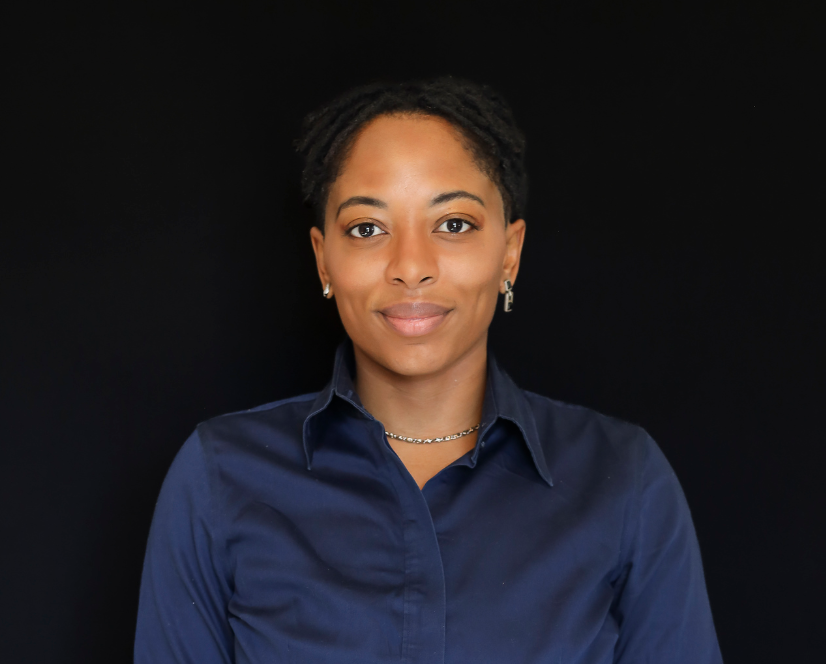
I’m Riana Lynn — founder and CEO of Journey Foods / Journey AI, holder of U.S. Patent №11,521,734 B2 (generative AI for optimized recipe and ingredient systems), World Economic Forum Tech Pioneer, former Google Entrepreneur-in-Residence, and one of the first women (and the first Black woman) to hold a generative AI patent in this domain.
I’ve spoken on more than 235 stages across 19 countries. Harvard. MIT. Stanford. Dubai World Expo. SXSW. Climate Week. Food systems summits. Corporate stages where the people in the room actually run plants, buy ingredients, and own P&Ls.
My talks do not stay in the abstract.
Background Stages (The Arc That Makes the Talk Land)
Stage 1 — Scientist
Biology, chemistry, anthropology, public health, Black studies. Formal training that taught me systems thinking at the molecular and cultural level at the same time.
Stage 2 — Operator & Entrepreneur
Built and sold FoodTrace (traceability). Worked inside venture (Cleveland Avenue). Served as Google Entrepreneur-in-Residence. Learned what it actually costs to move from insight to deployed product in food and CPG.
Stage 3 — Inventor
Filed and received the generative AI patent that uses neural networks to optimize recipes and ingredient systems against health, cost, popularity, and supply constraints. This is not a theoretical model. It is production-oriented IP.
Stage 4 — Builder at Scale
Journey AI now sits on multi-billion data points across ingredients and products. We help manufacturers, retailers, and brands make better formulation, sourcing, and automation decisions. The goal is not more dashboards. The goal is measurable reduction in waste, cost, and nutritional compromise.
Stage 5 — Storyteller & Cultural Translator
I treat stages the way a biologist treats systems and a filmmaker treats narrative. The best talks are the ones where someone in the audience recognizes their own operational pain inside the story — then leaves with a sharper sense of what to do next.
That combination is rare. Most AI speakers either come from pure research, pure strategy consulting, or pure product at Big Tech. Very few have patented generative systems, operated in food supply chains, and still know how to make a room of operators and executives lean forward.
What I Actually Deliver
- Generative AI that touches physical supply chains and product development
- How to move from AI pilots to systems that reduce waste and improve nutritional outcomes
- The equity and representation stakes when the people building the models do not look like the people who grow, process, and consume the food
- Practical architecture for data moats and autonomous operations in CPG and food manufacturing
- Why culture, storytelling, and technical systems have to travel together if the transformation is going to stick
These are not “AI will change everything” talks. They are “here is what we already built, here is what broke, here is what actually works at the intersection of models and molecules” talks.
How to Book Me
If your audience includes supply chain, CPG, retail, food manufacturing, sustainability, women’s leadership in STEM, or any group that needs AI grounded in real operational constraints — let’s talk.
Reach out through [rianalynn.com/speaking](https://rianalynn.com/speaking) or the contact form on the site. Tell me about the room, the stakes, and what you need the audience to walk away able to do.
The best AI speakers in 2026 will not be the ones who sound the most futuristic.
They will be the ones who have already shipped something that had to work in the real world — and can still make you feel why it matters.
I’m one of them.
Let’s put the right voice on your stage.