




The Multi-Hyphenate Founder Playbook: How I Operate as Scientist, Entrepreneur, Patent Holder, Speaker, and Content Creator Without Burning Out
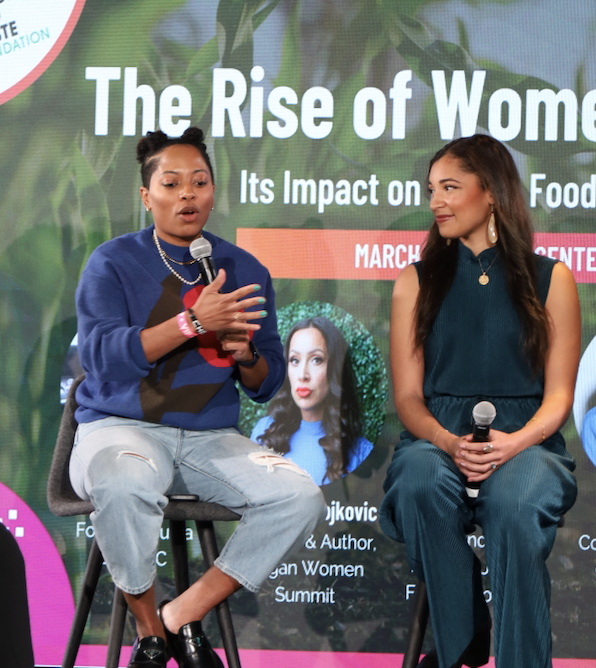
"People ask how I do it all. The honest answer is that I stopped trying to do it at once."
The question underneath that question is usually sharper than the one people ask out loud. What they want to know is whether the hyphenates are real. Whether the scientist and the founder and the patent holder and the person making a film are actually one person running on one coherent logic, or whether it's a pile of titles waiting to collapse.
Fair question. I've watched people collapse under exactly that pile.
What I've learned building Journey Foods, holding a generative AI supply chain patent, writing, speaking, and making a film across all of it: the hyphenates only work when they feed each other. The moment one becomes an island, you burn. The moment they form a system, you compound.
The hyphenates are a pipeline, not parallel tracks
Most people run their roles in sequence. Work on the business, then the speaking, then write something, then back to the business. That model is exhausting because it treats each identity as a separate job competing for the same hours.
Mine is a pipeline.
The patent is the clearest example. Holding what's recognized as the first generative AI supply chain patent issued to a woman-led team isn't a credential — it's a research artifact. Going deep enough on a problem to produce defensible IP generates material. That material becomes an essay, which becomes a keynote angle, which reaches rooms of people who become readers, which builds the trust that opens funding conversations and partnership doors.
The scientist runs the experiments. The founder operationalizes the results. The patent proves the experiments produced something real. The speaker translates it for people who need to understand what AI means for what they eat. The writing carries that translation to everyone who couldn't be in the room.
Once you see it that way, you stop asking how to find time for all of it. You start asking how to make each role generate fuel for the next.
The week, actually
I aim for roughly 60 percent of recurring tasks to be automated or systematized. That's not a philosophy. It's a survival number. Below it, the strategic work that actually moves things gets buried under administrative weight.
Monday is protected. No calls before noon. I use the block to review what the week needs to produce, not what it needs to do. Real difference. Production means something gets made or moved. Activity means you were busy.
I use Claude to get first passes on paper — not to replace my voice, but to get something in front of me fast enough that my actual thinking can engage rather than stare at a blank page. The prompt is always grounded in something specific: a real observation from the prior week, a question someone sent, a tension I noticed in the industry. Claude handles structure. I handle truth.
Tuesday and Wednesday are deep work. Scaling decisions, patent-adjacent research, writing that needs more than one draft. I defend these blocks like a founder defends runway, because that's what they are.
Thursday is people. Keynote prep, media, partnership conversations, anything requiring full presence with another human. I don't try to create on Thursdays. I show up.
Friday afternoon is the review. A standing appointment with the week that just happened. What worked, what didn't, what idea deserves a longer life. I keep a running document I call the Seed File. Most of my best writing and a few of my best business decisions started as a Friday note I almost didn't bother taking.
Emotional intelligence is infrastructure, not wellness
Sustainable pace is an operational requirement, not a lifestyle preference.
A few years ago a health setback forced me to reckon with the fact that I'd been running my body like a machine that could operate indefinitely on ambition. The recovery was humbling and clarifying in roughly equal measure. I came out of it with an honest relationship with my own limits, and a much clearer sense of which limits are real versus which ones I'd simply accepted without ever testing.
Two practices survived from that.
The first is a ten-second check before any work session. Am I anxious? Scattered? Actually energized? That answer determines how I spend the next two hours. Forcing deep creative work while scattered produces garbage I'll throw out anyway. Doing inbox triage during a genuinely good window is a waste of something scarce.
The second I call the dignity audit. Once a week: what am I doing that a version of me five years out would find embarrassing? It's almost always something I agreed to out of obligation rather than alignment. I cut those faster now than I used to. Not because I got more disciplined — because I got more expensive to myself.
One idea, three dimensions
A single piece of thinking should produce multiple outputs. Not repurposing in the tired social-media sense. More like the way a scientist treats a specimen: you look at it from every angle before you put it down.
The framework behind one keynote on AI and food culture became a long essay, then three newsletter sections, then a short film concept that eventually fed into Strange Little Fruit, which fed back into the keynote as a much better story. None of that was planned. It emerged because I stayed with the idea long enough to see its dimensions.
The 3D part is literal. I work in three registers: the intellectual argument, the human story, and the sensory detail. Food is useful here because it's inherently sensory. You can describe supply chain AI in purely technical terms, or you can describe what it means for a grandmother's recipe to be preserved or lost inside a database. The second version lands somewhere the first one never reaches.
rianalynn.com is where finished work lives. I built it as a living archive of the thinking, not a booking page. When event programmers vet me before reaching out, they read the actual work.
The nonlinear path is the credential
I did not arrive here in a straight line. The scientist-to-founder arc reads clean in a bio. It was not clean.
There were years of moving forward on paper and standing still in reality. Bets that didn't pay off on the timeline I'd promised. The health setback. Long stretches where the multi-hyphenate identity felt less like a strength and more like evidence I hadn't committed hard enough to any single thing.
What I know now: every domain left a residue. Biology gave me tolerance for ambiguous data — you learn to act before the picture resolves, because it never fully resolves. Founding gave me pattern recognition about what scaling actually requires versus what it looks like from outside. Writing gave me the ability to translate complexity without flattening it, which turns out to be most of the job.
Resilience isn't pushing through. It's accurate assessment — knowing when a wall is worth breaking and when it's a signal to find a different door. I've broken through walls I should have walked around. I've walked around a few I should have broken. The ratio improves with time, which is the only real argument for getting older in this work.
The stack, plainly
Four tools carry it.
Claude for first drafts, research synthesis, and thinking out loud at scale. A thinking partner, not a ghostwriter. Everything you read from me is in my voice because I'm the one who decides what's true.
Perplexity for research and computer automation — the agentic layer that handles browser-based work I used to do by hand. Pulling sources, routing inquiries, moving information between systems that don't talk to each other.
Slack is where the team actually operates, and increasingly where the automations surface. Not a chat app so much as the room the company lives in.
Webflow for publishing and presence. Full control over how the work appears, no developer needed for every update.
Four tools. I'm not managing twenty. I'm managing a few well, which is the only reason the 60 percent number holds.
The real answer
You don't do it all. You build a system where each part feeds the next, automate everything that doesn't require judgment, and defend the time and energy that does.
The hyphenates aren't a burden. They're the argument. The scientist makes the founder credible. The patent makes the speaker specific. The writing makes the thinking reachable. The speaking grows the audience. The audience makes the next project possible.
Which is a long way of saying: the pile of titles doesn't collapse if you build it as a structure instead of a stack.
FAQ
What does "multi-hyphenate founder" mean in practice?Operating across multiple professional identities at once — founder, speaker, writer, scientist — where each role actively supports the others instead of competing for the same hours.
How do you avoid burnout with multiple identities?Treat them as a system rather than parallel jobs. When each identity generates fuel for the others, total output exceeds what any single role would demand. Automation, protected deep-work blocks, and honest energy management are the mechanisms.
How does an AI patent connect to speaking and writing?The patent represents depth of research that becomes source material for keynotes and essays. It signals the thinking is grounded in real work rather than commentary.
What tools do you actually use?Claude for drafting and thinking, Perplexity for research and computer automation, Slack as the operating room, Webflow for publishing. Keeping the stack small is deliberate.
What is the 3D storytelling approach?Examining every idea through three registers — intellectual argument, human story, sensory detail. It produces work that travels across formats and reaches people who process information differently.
How do you decide what to automate?Anything repeatable that doesn't require judgment gets automated. Anything requiring perspective, relationship, or creative thinking stays with me. Target is roughly 60 percent systematized so the remaining 40 percent gets full attention.
What would you tell someone whose nonlinear path feels like a liability?Every domain you moved through left you something the people who stayed in one lane don't have: cross-domain pattern recognition, tolerance for ambiguity, the ability to translate between worlds. The nonlinear path isn't something to explain away. It's the argument.