


The Thinking Game Review: AI for Discovery
Most of the AI conversation in 2026 is about attention: what to automate, what to replace, what to sell next. The Thinking Game is about something rarer. It is about AI as a tool for discovery.
That is why I think every founder, policymaker and student working near AI should watch it, and then argue with it.
The details: The Thinking Game (2024). Directed by Greg Kohs. A documentary filmed over five years at Google DeepMind in London, following Demis Hassabis and the team behind AlphaFold. World premiere at the Tribeca Festival on June 7, 2024, with a limited U.K. theatrical release in March 2025. Released free worldwide on YouTube on November 26, 2025, where it passed 200 million views by late December. Free to watch on YouTube.
A 50 year old problem
The heart of the film is the protein folding problem. Proteins are chains of amino acids, and the way each chain folds into a three dimensional shape determines what it does. For roughly fifty years, predicting that shape from the sequence was one of biology's grand challenges.
The film follows DeepMind's work on AlphaFold up to the 14th Critical Assessment of Protein Structure Prediction, known as CASP14, in 2020, where the system's predictions were a breakthrough. That work later led to Hassabis and John Jumper sharing in the 2024 Nobel Prize in Chemistry.
Watching the team at CASP14 is genuinely suspenseful. It is a reminder that science, at its best, is a competition with the unknown, not with each other.
Why a food scientist cares about protein shape
Here is where my two worlds collide. Protein structure is not only a medical question. It is a food question.
The shape of a protein influences how a food gels, foams, emulsifies, browns and feels in your mouth. It shapes how plant proteins behave when we try to build new foods, how enzymes work in fermentation, and how our bodies digest what we eat. When I hear "protein folding," I think about drug discovery, yes. I also think about the future of nutrition and every ingredient decision a food team will make in the next twenty years.
I was granted a patent for a neural network system that generates recipes, so I have a personal stake in the idea that AI can expand what scientists are able to imagine. The Thinking Game is the most compelling argument on film that this is possible, and that the most valuable AI may be the kind that helps us understand the physical world rather than the kind that captures our scroll.
The access question
Now the argument. The Thinking Game had extraordinary access to DeepMind, and it shows. The film is fluent, accessible and warm. The Guardian's critic called it a "competent, fluent documentary" while noting it sometimes carries the flavor of a "corporate video." I agree with both halves of that.
A documentary made with that much access will naturally center the vision of its leaders. What I always want more of in a film like this is friction: the scientists outside the company whose decades of experimental work made AlphaFold possible, the questions about who owns the outputs of AI discovery, and how breakthroughs like this reach researchers, farmers and patients in places without huge budgets.
That is not a reason to skip it. It is a reason to watch it actively.
Why it went viral
More than 200 million views in about a month is not normal for a science documentary. I think people were hungry for an AI story that felt like hope instead of dread. The Thinking Game gives you a protagonist who talks about curiosity, and about building general intelligence to accelerate scientific discovery. You can be skeptical of that ambition and still be moved by the earnestness of the people chasing it.
What it teaches builders
The lesson I take away is about choosing the right problem. The team in this film did not set out to make something people would spend more time on. They chose a problem with a clear benchmark, a real scientific community and enormous downstream value. Then they stayed with it for years.
That is the kind of AI I want to build, and the kind I want more founders to fund. Not AI that optimizes us. AI that helps us see.
Verdict
Watch it tonight. It is free. The Thinking Game is an inspiring, accessible portrait of AI in service of science, best viewed with a little healthy skepticism about who gets to tell the story. Then ask yourself what problem in your own field deserves this kind of patience.
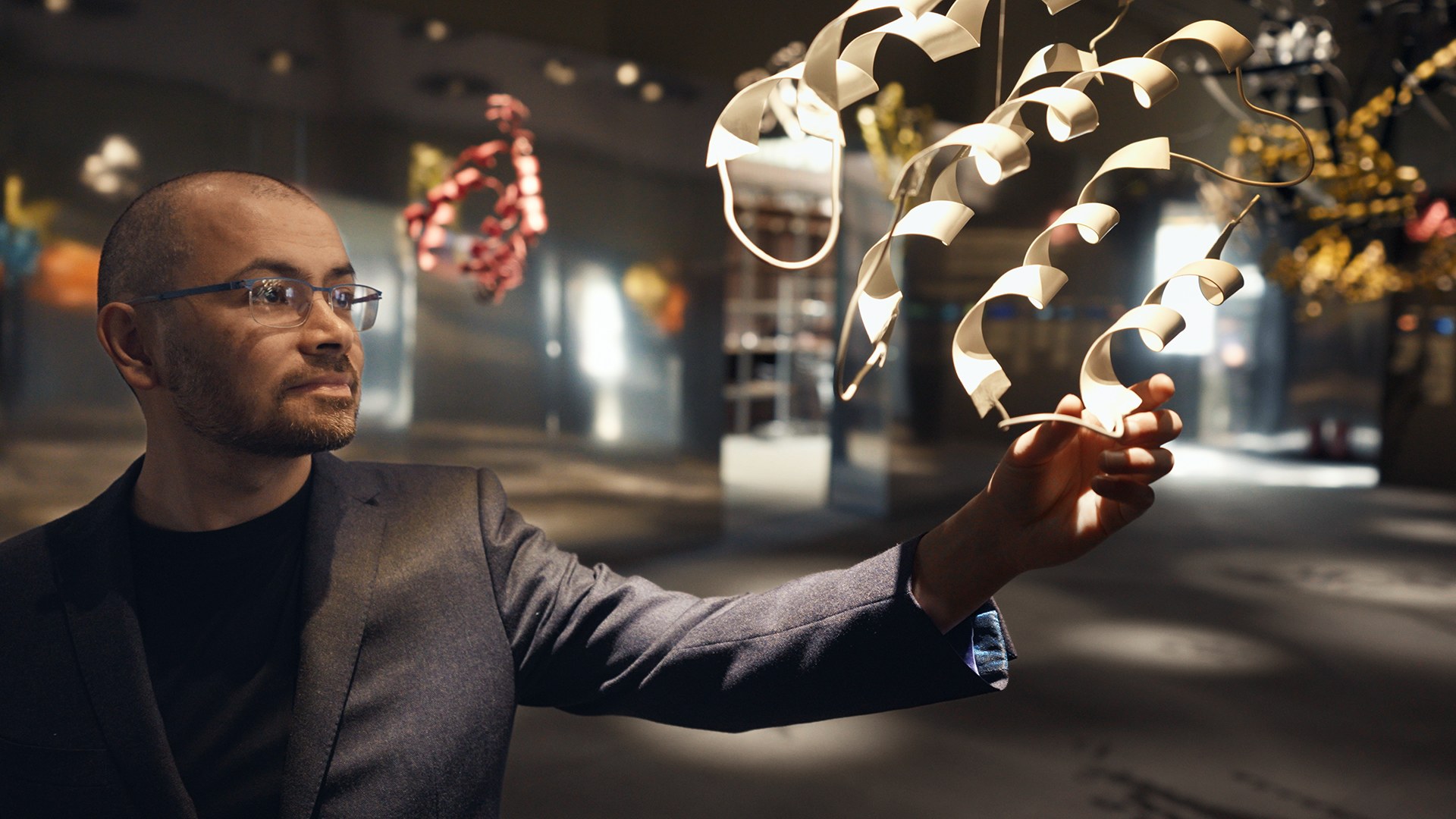
Cover image: Courtesy of Tribeca Festival via TribecaFilm.com