


Tony Review: The Kitchen That Made Bourdain
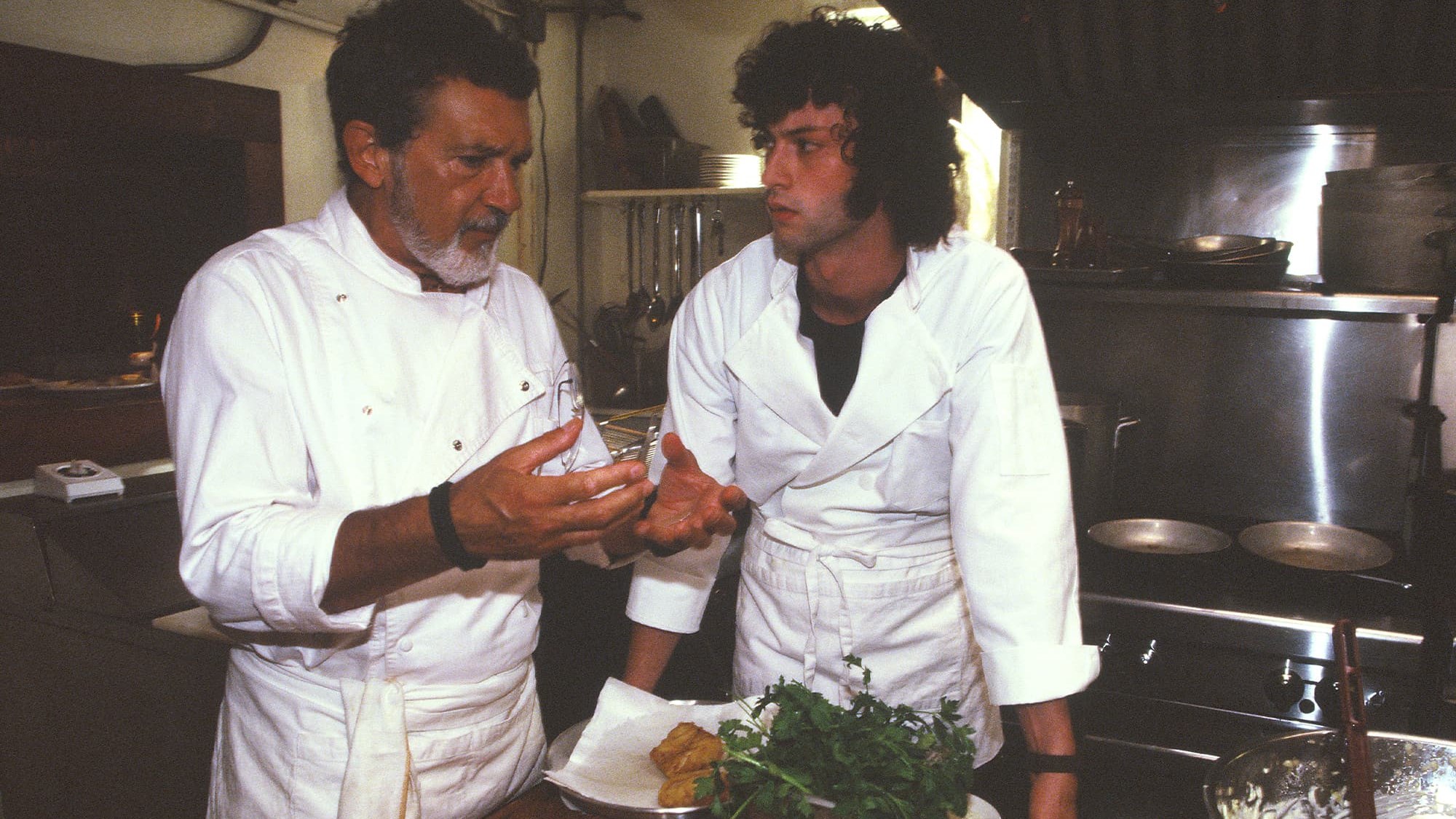
Tony is not really a biopic. It is a movie about what a kitchen teaches you that a classroom can't.
That is why it is one of my favorite food films of 2026, and why I think it will last longer than the conversation about whether it is accurate.
The details: Tony (2026). Directed by Matt Johnson (BlackBerry), written by Todd Bartels and Lou Howe with Johnson and Matthew Miller; the script appeared on the 2024 Black List. Starring Dominic Sessa as Anthony Bourdain, with Antonio Banderas, Emilia Jones, Leo Woodall, Stavros Halkias, Monica Raymund, Dagmara Domińczyk and Rich Sommer. Released by A24 on August 7, 2026, expanding nationwide August 21. Rated R. Available to rent or buy on major digital platforms at the time of writing.
A spoiled kid walks into a seafood shack
It is 1975. Tony Bourdain is 19, a Vassar student who has told everyone he won a writing fellowship. He didn't. He follows his high school crush Nancy, played by a grounded Emilia Jones, to Provincetown, gets drunk, gets robbed, and ends up talking his way into a dishwashing job at The Flagship, a local seafood restaurant, by lying about his experience.
The film opens with Bourdain's own line from Kitchen Confidential, describing his younger self as a spoiled, self-destructive young lout badly in need of a good ass-kicking. Then it spends a summer delivering the kicking.
Dominic Sessa, who broke out in The Holdovers, is electric. He gets Bourdain's hunger for words and his fear of being ordinary. He also lets Tony be genuinely unlikable for long stretches, which takes nerve when you are playing someone so many people loved.
The mentor who teaches with his hands
Antonio Banderas plays the owner and head chef, who refuses to give his real name and is simply called Chef. It is a standout performance, and critics have rightly singled it out. He wakes Tony with a bucket of seawater. He bites into a tomato like it is a sacrament. He spends a day making his own ketchup and then pours it into old Heinz bottles.
That ketchup detail is funny, and it is also the most accurate thing in the movie about food craft. Chef does not care about branding. He cares about what is in the bottle. Tony, naturally, tries to give him business advice. The film is wise enough to make some of that advice bad.
As a food entrepreneur, I live in that tension every day. Craft and marketing both matter. But when the story starts to matter more than the substance, something has gone wrong. Chef is the substance.
The kitchen as a school
Johnson, who also made the startup film BlackBerry, has a gift for showing work. The kitchen scenes are fast, chaotic and funny, part boot camp and part family. Tony learns to show up on time. He learns to push a potato through a fry cutter. He learns that at the end of a hard shift, you eat together.
He also learns the darker parts. Leo Woodall's Sal, a reckless cook, introduces him to cocaine, and the film does not glamorize where that road goes. Bourdain's later life casts a long shadow over every scene, and the film handles that shadow with restraint. When Chef tells Tony the story of François Vatel, the 17th century cook who took his own life before a royal banquet, the moment lands with a weight the characters cannot yet understand.
About the facts
This is a fictionalized film. Critics have pointed out that it compresses years of Bourdain's kitchen education into one summer, and the plot, including a grease fire during a lobster thermidor special, is built for drama. I'm fine with that. Tony is honest about being a fable of formation, not a documentary.
What it gets right is the spirit: that physical work can give a lost young person a sense of worth that status never did. In a moment when so many people feel replaceable by software, a film about learning a trade with your hands feels quietly radical.
The lens I bring
Bourdain changed how a generation thought about food. He made it a way to understand people, places and power. That is the tradition I want to write in. Tony shows us where that curiosity came from: not from a fellowship, but from a hot kitchen full of people the world did not consider important.
Verdict
See it. Tony is funny, tender, a little sleazy and full of love for the people who cook. Banderas deserves every award conversation he gets. Watch it, then cook something slowly for someone, and think about who taught you how.
Cover image: Courtesy of A24 via A24 Awards