


We Are All Nurses Now
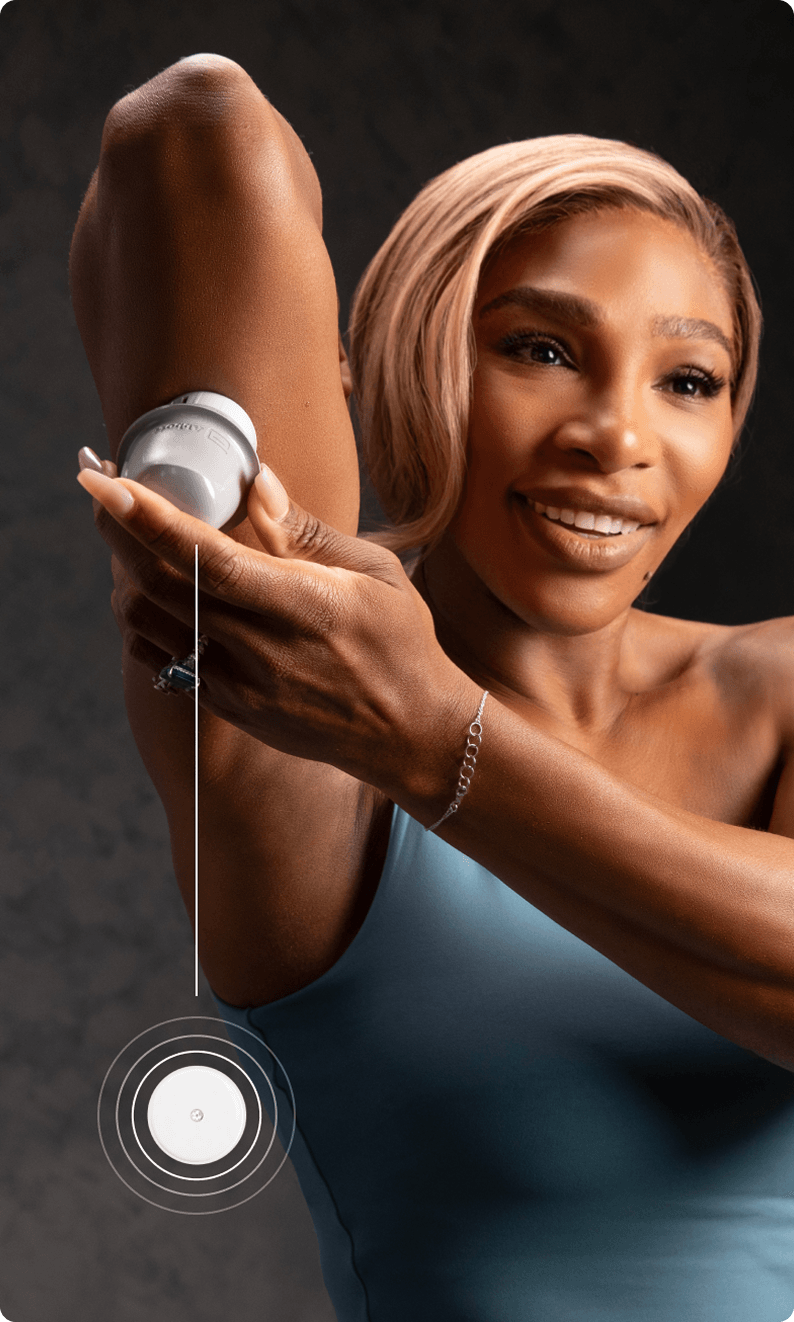
The home test kit didn’t just bring the clinic into our bathrooms. It quietly gave us a job.
There was a time when knowing what was happening inside your body required an appointment.
Someone checked you in. Someone took your temperature. Someone drew your blood, labeled the tube, sent it to a laboratory, interpreted the results and eventually called you.
Today, a surprising amount of that infrastructure arrives in a box.
Swab your nose. Prick your finger. Spit into a tube. Pee on a strip. Photograph the result. Sync the device. Mail the sample. Wait for an app to tell you what your body is doing.
Pregnancy. COVID. Flu. Fertility. Blood glucose. Cholesterol. STIs. Hormones. Genetics. Food sensitivities and biomarkers of increasingly debatable usefulness.
The bathroom counter is becoming a diagnostic surface.
And whether we realize it or not, we are all nurses now.
Not literally, of course. Nurses possess years of clinical education and expertise that a QR code and lancet cannot reproduce. But economically and behaviorally, something important has happened: pieces of healthcare labor have migrated from trained professionals to patients, and into a fast-growing consumer market.
We collect the specimen.
We operate the device.
We document the result.
We monitor the trend.
Increasingly, we decide whether the number is important enough to do something about.
Healthcare is undergoing the same transformation that already happened in banking, travel and retail.
We became our own bank tellers when ATMs arrived. Our own travel agents when Expedia arrived. Our own cashiers when self-checkout arrived. Now that same self-service logic is powering a home-testing economy: the global home care testing market was about $10.5 billion in 2024 and is projected toward roughly $18 billion by 2030, while the broader self-testing market was about $11.8 billion in 2025, with online channels taking more than half of that spend. Direct-to-consumer lab testing alone was roughly $3.2 to $3.6 billion, and e-commerce/DTC already accounts for roughly two-fifths of at-home diagnostics revenue.
That is not just a retail story. Every kit sold online is also a data pipeline: specimens, timestamps, app scores and longitudinal biomarkers flowing from bathrooms into dashboards companies can personalize, monetize and, for better or worse, interpret at scale. Healthcare is being unbundled into product SKUs and health datasets at the same time.
The Clinic Is Becoming a Supply Chain
The most interesting thing about the home-testing boom isn’t the test.
It’s the infrastructure around it.
A modern home health product can combine a disposable diagnostic, packaging, cold-chain or sample logistics, a smartphone camera, an algorithm, a laboratory, a subscription, a clinician network and a data dashboard.
That makes the humble test kit something much bigger than consumer healthcare.
It is a miniature decentralized healthcare system.
The physical clinic used to bundle collection, testing, expertise and interpretation in one place. Technology is pulling those pieces apart and distributing them across our homes, phones, pharmacies and mailboxes.
This could be enormously useful.
Someone living hours from a specialist may be able to collect a sample at home. A woman tracking fertility can generate longitudinal information instead of receiving a snapshot once a year. A patient monitoring glucose can see how Tuesday’s dinner affected Wednesday morning rather than waiting months for another appointment.
We are moving from episodic healthcare toward continuous observation.
But continuous observation creates a new problem.
More data does not automatically create more understanding.
Your Body Has a Dashboard Now
Consumers are increasingly being trained to see themselves as streams of measurements.
Sleep score: 78.
Glucose: 112.
Resting heart rate: 64.
Ovulation window: three days.
Vitamin D: low.
Biological age: allegedly 4.7 years younger.
The quantified-self movement used to belong to biohackers wearing strange devices at conferences.
Now your aunt has a smartwatch.
Your friend has a continuous glucose monitor.
Your cousin is ordering a hormone panel from Instagram.
And millions of people learned during the pandemic how to open a foil packet, swab themselves, run a lateral-flow assay and interpret a control line.
That was an extraordinary cultural change disguised as a public-health necessity.
We taught entire populations basic diagnostic behavior almost overnight.
The next generation may find it strange that previous generations knew so little about what was happening inside their bodies between doctor’s appointments.
But there is a darker possibility too.
They may have dramatically more information and no better idea what to do with it.
The New Health Divide Isn’t Just Access. It’s Interpretation.
Imagine two people receive exactly the same abnormal home-test result.
One has a primary-care physician, excellent insurance, flexible work hours, medical literacy and enough money to order another test tomorrow.
The other doesn’t.
Same information.
Completely different healthcare.
That is why democratizing diagnostics is not the same thing as democratizing health.
A $49 test can make measurement accessible while leaving treatment completely inaccessible.
And as testing moves home, healthcare companies have to confront an uncomfortable design question:
What happens five minutes after the consumer learns something is wrong?
That may be the most important part of the product.
Not the beautiful packaging.
Not the app.
Not the AI-generated explanation.
The handoff.
Can I speak to someone?
Can I confirm the result?
Can I afford the next test?
Can the data move into my medical record?
Can my physician trust it?
Can I get medication or treatment if necessary?
What does this number actually mean for me?
Without that infrastructure, democratized testing risks creating something healthcare has never had at this scale: millions of people carrying around medically flavored information they don’t fully understand.
AI Makes This Much More Interesting
Home diagnostics become considerably more powerful when the test is no longer an isolated event.
Imagine an intelligence layer that can see your laboratory results, medications, food intake, activity, sleep, menstrual cycle, family history and months of home measurements.
The interesting question stops being:
“Is this number high?”
It becomes:
“What changed?”
Your iron markers moved after a dietary change.
Your glucose response changed after three nights of poor sleep.
A biomarker has drifted slowly for eight months.
The packaged food you’re eating every morning contains ingredients that matter given what you’re monitoring.
This is where diagnostics, food data, wearables and artificial intelligence begin colliding.
For decades, nutrition has largely operated on population-level recommendations.
Eat less of this.
Eat more of that.
Get this much protein.
Stay below this much sodium.
But increasingly, we can imagine food recommendations responding to an individual’s actual biological feedback.
That creates an entirely different food system.
Your grocery cart becomes part of your health interface.
But Please Don’t Diagnose Yourself Into Oblivion
There is an obvious danger here.
When measurement becomes cheap, companies have an incentive to convince us that everything should be measured.
When dashboards become addictive, normal biological variation can begin looking like pathology.
When AI can explain every number, explanation can easily be mistaken for diagnosis.
And when wellness products are marketed directly to consumers, the boundary between useful information and expensive anxiety becomes extremely profitable.
Sometimes the most medically appropriate response to a number is:
Nothing.
Sometimes you need another measurement.
Sometimes the test itself isn’t particularly meaningful.
And sometimes you need an actual clinician.
Consumer healthcare needs to become sophisticated enough to tell us those things too.
The Most Important Medical Device May Be the Handoff
The future of healthcare probably isn’t everyone becoming their own doctor.
It is something more interesting.
Patients become active nodes in the healthcare system rather than occasional visitors to it.
We collect more information ourselves. Machines perform more preliminary interpretation. Clinicians spend less time obtaining basic data and more time applying expertise to ambiguous or consequential decisions.
At least, that’s the optimistic version.
The bad version is healthcare outsourcing more labor to patients without lowering prices, improving access or providing adequate interpretation.
We shouldn’t confuse self-service with empowerment.
Self-checkout didn’t make us grocery executives.
Doing your taxes online didn’t make you an accountant.
And performing a finger prick does not make you a nurse.
But the redistribution of work is real.
The clinic is leaking into the home.
The laboratory is arriving by mail.
The medical chart is becoming an app.
The grocery store is becoming a health-data environment.
And ordinary people are being asked to collect, monitor and increasingly interpret information that once belonged almost exclusively to medical institutions.
So maybe “we are all nurses now” isn’t quite right.
Maybe the more provocative truth is this:
Healthcare has discovered the user-generated content model.
Our bodies generate the data.
We collect it.
We upload it.
Algorithms organize it.
Companies build products around it.
And somewhere in that loop, we still have to answer the only question that ever really mattered:
What should I do next?