


Wonka's The Golden Ticket: The Set Is the Star
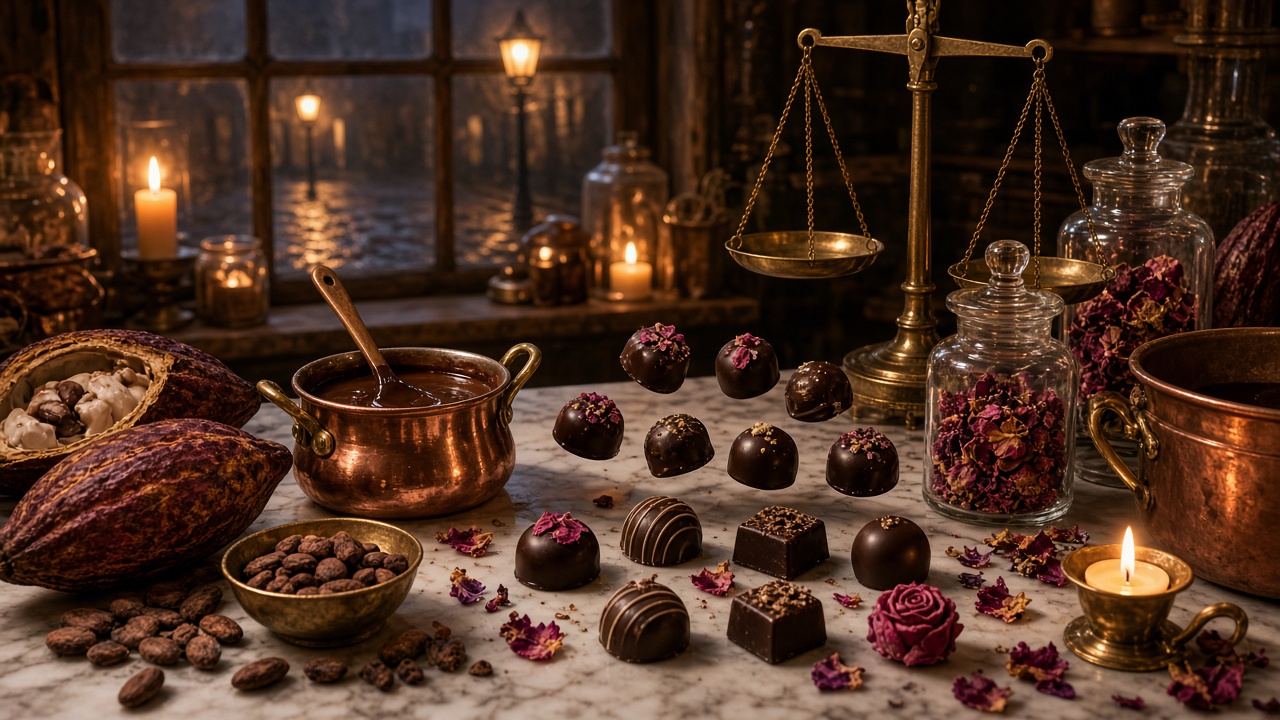
The real contestant on Wonka's The Golden Ticket is the factory. Everyone else is just visiting.
That is not a complaint. It is the most interesting thing about Netflix's new reality competition. Somebody decided the world had to be real enough to touch, lick and eat. Then they built it.
The details: Wonka's The Golden Ticket (2026). A nine episode reality competition series produced by Eureka Productions, a Fremantle company, for Netflix, in collaboration with the Roald Dahl Story Company and the Gene Wilder Estate. Showrunners Alison Holloway and Emer Harkin. There is no traditional host: Wonka is voiced by an AI recreation of Gene Wilder, made with his estate's consent, while Howie Mandel, Nick Cannon and Wayne Brady appear as holograms to host the game show challenges. Premiered September 23, 2026, with a two part finale on September 30. Streaming on Netflix.
The premise is simple. The build is not.
Twelve people find golden tickets in chocolate bars, and each brings a partner into the factory. Inside, they face games, tests and temptations designed to push them physically, mentally and morally. Players are eliminated until one wins a "lifetime supply of money," which Netflix translates into $3 million paid out over 30 years.
The format is familiar, and critics have compared it to Big Brother and Squid Game: The Challenge. The factory is not.
According to Netflix, the production built an 88,000 square foot set across three studios at Village Roadshow Studios on the Gold Coast in Australia, in 12 weeks. Australia's TV Tonight reports 28 separate sets, with 120 people in the art department alone. There is a 27,000 gallon chocolate river. There are two miles of lickable wallpaper. The vanishing acts are practical illusions, not green screen.
No budget figure is public. But Deadline noted that the show is more expensive to produce than a typical dating format, and you can see it in every frame. It looks like it was built at the scale of the Korean competition shows that have reset what audiences expect from unscripted television.
The set as infrastructure
In food, the things nobody sees usually make everything else possible. Korean television is the best teacher I know on this.
When Netflix made Culinary Class Wars, its producers told Korea JoongAng Daily that building the first set, with 40 live cooking stations in a space about the size of a football field, took about a month and cost far more than their usual decorative sets, because the plumbing, electricity and gas don't show on camera. The Korea Times reported it took about 40 days to build, with gas pipes, drainage and ventilation. Physical: 100 built a set about the size of two soccer fields for its first season, then roughly three for its second, filled with about 400 tons of sand.
Those shows understood something American food TV often forgets. The set is not decoration. It is the system that determines what contestants can actually do. Water, fire, drainage, sightlines, cameras.
The Golden Ticket brings that same seriousness to fantasy. Its art director's team tested every edible element for taste and for how it would read on camera, and brought in professional cake makers who know what holds up under studio lights. Contestants' dietary restrictions were flagged in advance. That is product development and food safety, hidden inside a children's story.
The spectacle versus the food
The Chocolate Room is edible: grass that tastes like lemon and lime sour straws, candied apples on trees, flowers flavored like toffee, banana, peanut butter, caramel and raspberry. Flavor surprise is real sensory science, and I love it.
But the chocolate river, the most iconic thing in the room, is not food. Netflix describes it as 27,000 gallons of "chocolate goop," a specially made blend mixed in Los Angeles and shipped across the ocean in 93 giant vats. It took six weeks to arrive.
That detail sums up the whole show for me. The most beautiful thing on screen is engineered to look delicious, not to be eaten. Spectacle and nourishment are two different design problems, and this production solved the first one brilliantly.
Who builds the world, and who gets to eat in it
Every big set is a labor story. Hundreds of craftspeople, culinary artisans and magic consultants built this factory, according to Netflix. Rusty Goffe, an Oompa Loompa in the 1971 film, returned to help shape a modern Oompa Loompa workforce of varying sizes, in what he called his swan song.
I appreciate that care. I also notice the structure: the workers keep the factory running while the guests compete for the money. Dahl built that tension into the original story, and the show puts it on screen again.
What American food TV should learn
The lesson is not "spend more." It is that the environment is part of the format. When you engineer the space around what people are actually doing, cooking, lifting, deciding, the drama gets better and the audience trusts it more. The next step is to bring that ambition to food itself, so that the most impressive thing on set is also something you would want to taste. For the opposite approach, food drawn with so much care you can almost taste it, see my ranking of the best Studio Ghibli food scenes.
Verdict
Watch it for the factory. The gameplay is standard reality TV, and the AI Gene Wilder voice will divide people. But as a feat of world building, Wonka's The Golden Ticket is extraordinary. And if you want more Wonka, Netflix's animated film Charlie vs. the Chocolate Factory, with Taika Waititi as Wonka, arrives in theaters on November 5, 2027.