


Aisha's Story Review: Food Heritage as Work
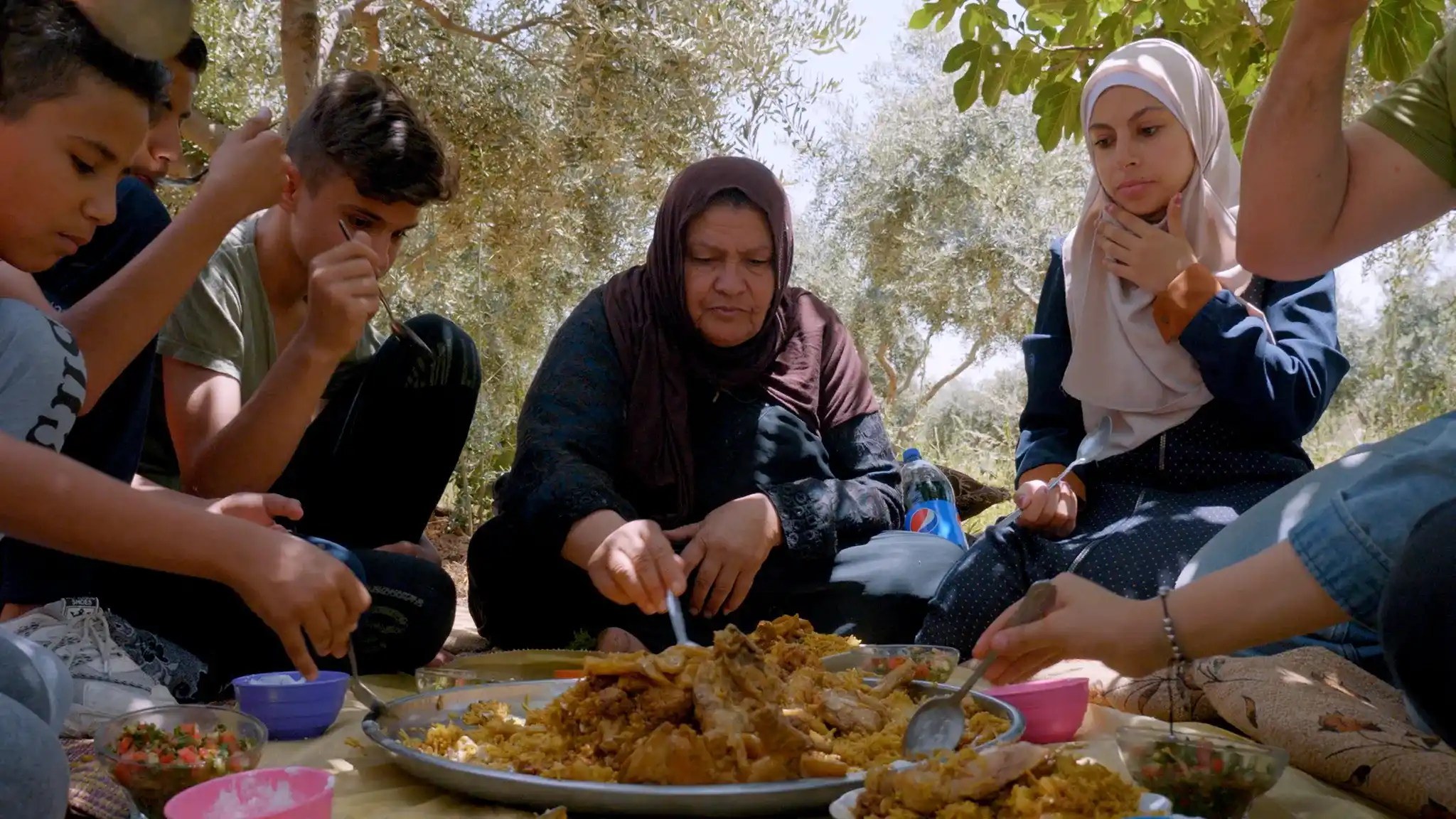
Some films about food are about appetite. Aisha's Story is about continuity.
I named it the best food film of the year in my best food movies of 2025 list, and I keep coming back to it. It is a short documentary, about an hour long, and it holds more about how food systems actually survive than most features twice its length.
The details: Aisha's Story (2025). A Canadian documentary directed by Elizabeth Vibert and Chen Wang, written by Vibert and co-produced by Salam Barakat Guenette. In Arabic, 62 minutes. World premiere at Hot Docs in Toronto in April 2025, where it won the Audience Award for mid-length films and was named a Top 20 Audience Favourite. It opened the DOXA Documentary Film Festival in Vancouver and later won Best Feature Documentary at the Al Ard Film Festival in Sardinia. Distributed in the US by Watermelon Pictures and available to stream on OVID.
A mill as a living archive
Aisha Azzam has lived in the Baqa'a refugee camp in Jordan since she was ten years old, after the 1967 war. In 1987, she and her late husband Hassan set up a family grain mill there. They raised twelve children in the camp. Today she still stone-mills wheat, grains and herbs for Palestinian cooking, working alongside her son.
That is the plot. It does not need more.
What the film shows is that a mill is not just a small business. It is a living archive. The grains and herbs she prepares hold recipes, regions and family histories. When the place that food came from is no longer reachable, the knowledge of how to make it becomes the thing you carry.
And she literally carries it. According to the film's official site, Aisha teaches her grandchildren on a grinding stone her own grandmother carried when the family fled in 1948. I cannot think of a clearer image of food as memory. A tool that has outlived three generations of displacement is still in use, still producing food, still teaching.
Food heritage is labor
I study food for a living, and I always want to know who is doing the work. This film answers that question on every frame.
The work is physical. Cleaning, roasting, cracking and grinding grain is repetitive and skilled. Aisha also cooks with her daughters "hand by hand," as the filmmakers describe it, even though several of her daughters are blind. Knowledge moves through touch and repetition, not recipe cards.
Her son Omar describes his mother's work to protect food heritage as a form of resistance. Her daughter Rawand describes it as sumud, the Palestinian practice of steadfastness. I find that framing powerful because it refuses to make the food decorative. Preserving a cuisine under displacement is not a hobby. It is a discipline, and someone has to show up to do it every day.
On the film's site, Aisha says: "Food is the most precious part of Palestinian heritage." I believe her, and the film earns it.
Preservation as infrastructure
I wrote in my 2025 list that food preservation is not nostalgia. It is infrastructure. After spending more time with this film, I would go further.
We spend billions on supply chains, cold storage and shelf stable innovation. Those systems matter. But they are only half of food infrastructure. The other half is people like Aisha: the keepers of technique, seed knowledge, flavor and the social rituals that make a meal mean something. When that human infrastructure breaks, no amount of logistics can rebuild it.
That is also why the film's process matters. Vibert first met Azzam in 2018 while screening another film in Jordan, and the two began an oral history collaboration that became this documentary. The production trained young people from the camp community as crew. That is a respectful model for food storytelling. The community is not just the subject. It is part of the team.
Who gets to tell food stories
This connects to something I keep noticing across this year's food films. La Cocina is about the immigrant workers who make a restaurant run and rarely get seen. The new Nobu documentary is about one chef's name on more than fifty restaurants. Aisha's Story sits at the other end of that spectrum: one family, one mill, one camp, and a heritage that belongs to an entire people.
If you liked the systems view of Fork in the Road, watch this as its intimate counterpart. One maps a national food system. The other shows you a single node that holds a whole culture together.
Verdict
Watch it. Aisha's Story is short, quiet and essential. It will make you look at a bag of flour, a jar of za'atar or a family recipe differently. And it is a reminder that the most important food innovation is sometimes simply refusing to forget.
Cover image: Courtesy of Aisha's Story via the official Aisha's Story site